
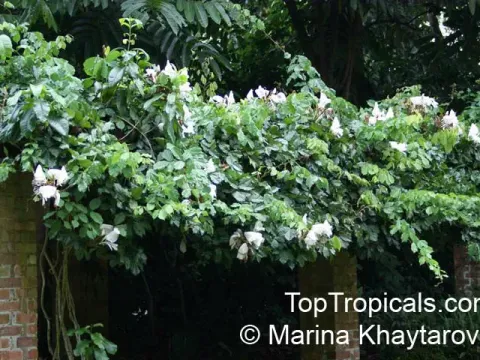
Camoensia
Camoensia
Camoensia is a genus of woody vines belonging to the Fabaceae family. This plant is globally recognized for its spectacular flowers, which are among the largest and most fragrant within the legume family, often serving as a subject of botanical interest.
What the section contains

Camoensia
The native range of the culture is centered in the tropical regions of West and Central Africa. As a climbing plant, it naturally inhabits rainforest ecosystems, where it utilizes high trees to compete for sunlight in the dense jungle canopy.
Climate requirements for this plant are strictly tropical. It thrives in high-humidity environments with consistently warm temperatures. Frost and cold drafts are lethal to the plant, necessitating cultivation in specialized greenhouses or controlled conservatory conditions.
The soil profile should be rich in organic matter and possess excellent drainage capabilities. Camoensia does not tolerate waterlogged soils, which can quickly lead to root decay, so the cultivation medium must be well-aerated and nutrient-dense.
Agricultural management requires the installation of sturdy trellis systems to support the vigorous growth of the vine. Pruning and selective training of the stems are essential to ensure the plant remains manageable and productive throughout its growing cycle.
Major diseases affecting the plant involve fungal pathogens, particularly those triggered by poor ventilation and excessive moisture. Root rot is a common issue if the watering schedule is not optimized for the specific soil type.
Pests such as spider mites and scale insects represent significant threats to the foliage. Integrated pest management, including regular inspections and the use of appropriate horticultural oils or soaps, is recommended for effective control.
Environmental stress often stems from fluctuating light conditions. Insufficient light intensity will lead to stunted growth and a lack of flowering, while excessive direct sun exposure can severely scorch the large, sensitive leaves of the plant.
Nutrient deficiency is another challenge, often manifesting as interveinal chlorosis if the soil pH is not maintained at the correct level. Regular soil testing is vital for identifying and correcting nutrient imbalances in a timely manner.
Physical injuries during the training of the vine can serve as entry points for pathogens. Careful handling and the use of non-abrasive materials for staking are critical steps in maintaining the overall health and productivity of the crop.