
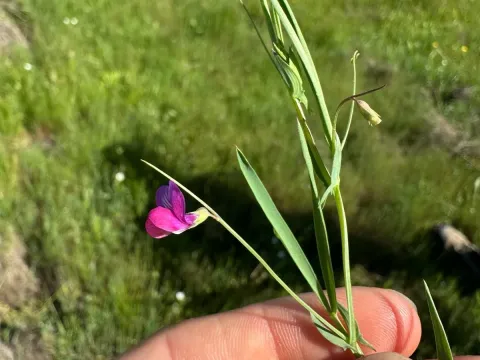
Anglepod pea
Lathyrus angulatus
Lathyrus angulatus, commonly known as the anglepod pea, is a leguminous annual crop valued for its nutritional profile and soil-enriching properties.
What the section contains
Anglepod pea
Sowing occurs in early spring once the soil temperature consistently reaches 8-10 degrees Celsius, ensuring favorable conditions for germination.
Standard row planting with a spacing of 15-20 cm is recommended to achieve an optimal plant density and facilitate efficient field management.
Seeds should be placed at a depth of 3-5 cm, depending on the soil moisture profile, to ensure consistent and uniform seedling emergence.
The seeding rate typically ranges from 80 to 140 kg/ha, depending on whether the primary goal is biomass production or seed harvest.
The crop thrives in temperate climates and is well-adapted to environments that offer moderate rainfall throughout the growing season.
It prefers well-drained, fertile loamy or sandy soils with a neutral or slightly alkaline pH to maximize nutrient uptake and biological nitrogen fixation.
Sunlight exposure is critical for the developmental stages of the anglepod pea, necessitating open fields free from aggressive weed competition.
Inoculation with appropriate rhizobial strains is highly recommended, especially in fields where legumes have not been cultivated recently.
While relatively drought-tolerant, supplemental moisture during the flowering and pod-filling stages can significantly increase final yields.
The biomass yield of Lathyrus angulatus can reach up to 25 tonnes per hectare, providing a high-quality forage option for various livestock.
Seed yields generally range between 1.5 and 2.5 tonnes per hectare, reflecting the crop's productive potential under good management conditions.
This crop serves as a vital component in sustainable agriculture, enhancing soil structure and leaving residual nitrogen for subsequent crops.
The protein-rich seeds are an excellent ingredient for formulating animal feeds, particularly for poultry and swine production systems.
Effective biomass management allows farmers to produce high-value hay or silage, contributing to better overall farm profitability.
Common phytopathological issues include Fusarium wilt and various root rots, which are often exacerbated by poor drainage and excessive soil moisture.
Pest pressures typically involve pea weevils and aphids, which can damage foliage and interfere with reproductive growth during the season.
Integrated pest management strategies are essential, focusing on crop rotation cycles of 4-5 years to break disease life cycles effectively.
Chemical intervention should be limited to instances where economic thresholds are exceeded, always prioritizing environmentally responsible application methods.
- Maintaining adequate crop rotation cycles.
- Monitoring for aphid colonization early in the season.
- Ensuring proper seedbed preparation to prevent waterlogging.
Harvesting for forage should be timed during the mass flowering phase, when nutrient concentration in the biomass is at its absolute peak.
Seed harvesting requires careful timing, targeting the stage when pods begin to turn color but before they reach full brittleness to minimize shattering.
Direct combining is common, although swathing may be employed in unevenly ripening crops to improve harvest efficiency and reduce field losses.
Post-harvest conditioning involves immediate cleaning and drying of the grain to reach a safe moisture content for long-term storage stability.
Proper harvest and storage practices are crucial to maintain seed viability and prevent the onset of fungal growth in stored produce.