
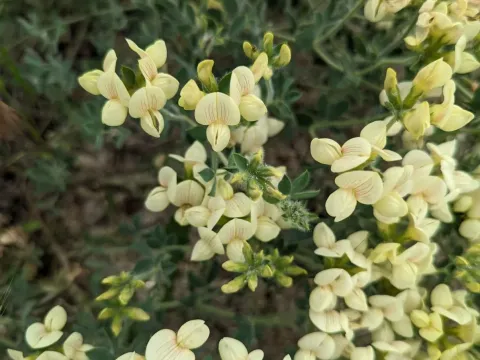
Aegean trefoil
Lotus aegaeus
Aegean trefoil (Lotus aegaeus) is a resilient perennial legume highly valued for its role in sustainable forage production. The seeds have a hard seed coat, which necessitates mechanical scarification to ensure uniform and rapid germination after sowing.
What the section contains
Aegean trefoil
The optimal time for sowing is early spring when soil temperatures reach 8 to 10 degrees Celsius. This crop is also suitable for late autumn sowing, as it can utilize winter moisture to establish a strong root system before the onset of the active growing season.
The standard seeding rate ranges from 10 to 12 kilograms per hectare, depending on the chosen sowing method and soil characteristics. It is crucial to maintain a planting depth of no more than 2 centimeters to prevent seeds from drying out in the topsoil.
During the first year, Aegean trefoil grows slowly, making weed control a priority for the farmer. Rolling the soil immediately after sowing is recommended to improve the contact between seeds and the soil, thereby increasing moisture uptake.
As the plant develops, it establishes a deep root system capable of biological nitrogen fixation. This attribute not only supports the growth of the plant itself but also improves the overall nitrogen levels in the soil for subsequent crops in the rotation.
Aegean trefoil is well-adapted to varied climatic conditions, exhibiting excellent tolerance to drought and thermal fluctuations. Given its Mediterranean origins, it thrives in environments with high solar radiation and good light availability.
The crop is not overly demanding regarding soil fertility and can successfully grow on various soil types, particularly loams with neutral or slightly alkaline pH levels. It is also noted for its ability to withstand low to moderate soil salinity.
Successful cultivation requires soil with excellent drainage, as the plant is highly sensitive to waterlogging and poor aeration in the root zone. Sites prone to seasonal flooding are generally unsuitable for this species.
Cold tolerance is another significant feature, allowing the crop to survive harsh winters, especially where a stable snow cover provides insulation. In regions with freezing temperatures and no snow, the plant may experience some winter damage.
Agricultural management should prioritize phosphorus and potassium application to facilitate nodule development. Nitrogen fertilizers are typically unnecessary, as the symbiotic relationship with rhizobia provides sufficient nitrogen for the plant's growth.
The primary use of Aegean trefoil is for high-quality green forage, hay, and haylage production. It is an ideal feed source for livestock, offering a balanced nutritional profile, particularly in terms of crude protein and essential minerals.
Yield capacity depends largely on the frequency of harvesting and local environmental conditions. With proper moisture management, growers can achieve two high-quality cuts per season, ensuring a consistent supply of fodder for the livestock.
Seed production is a secondary but significant economic activity. Harvesting must be timed precisely to capture the seeds before the pods naturally dehisce and scatter the seeds on the field, which would otherwise lead to yield losses.
A distinct advantage of Aegean trefoil is its stability in forage quality even if harvesting is slightly delayed. This provides flexibility for farm management, allowing for operations to be conducted during favorable weather conditions.
Integrating Aegean trefoil into grass-legume mixtures significantly enhances the total productivity of pastures. This synergy between legumes and grasses provides a balanced diet for animals and maximizes the efficiency of land usage.
The primary pests affecting Aegean trefoil are various species of weevils that target reproductive structures, such as flower buds and developing pods. Significant infestations can drastically reduce seed yield, requiring careful scouting.
Fungal diseases like rust and powdery mildew may occur, especially in dense stands with high humidity. Proper field management, including appropriate seeding rates and airflow, is the most effective way to prevent the spread of these pathogens.
Root rot is typically associated with poor drainage and excessive soil moisture. Farmers should monitor fields for signs of compaction and ensure that the site selection accounts for the water drainage needs of the plant.
Early in the season, young seedlings can be vulnerable to aphids, which feed on the sap and stunt plant growth. If populations reach an economic threshold, biological control agents or targeted, approved insecticides should be utilized.
Aegean trefoil is generally more resistant to common legume diseases than alfalfa, making it an economically viable choice for integrated pest management programs. Regular monitoring is essential to keep the crop healthy and productive.