
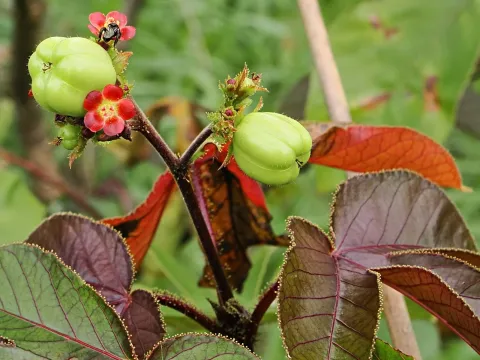
Jatropha
Jatropha L.
Jatropha, primarily Jatropha curcas, is propagated either by seeds or stem cuttings. Sowing should ideally coincide with the onset of the rainy season to ensure optimal germination and early establishment of the crop.
What the section contains


Jatropha
For commercial plantations, seeds are typically germinated in nurseries using specialized containers. This practice ensures that only vigorous seedlings are transplanted to the field, significantly increasing the survival rate of the crop.
Vegetative propagation involves using woody cuttings approximately 30–50 cm in length, planted directly into the soil. This method allows for a quicker harvest cycle compared to seed-based propagation.
Planting density is determined by the intended use and the level of farm mechanization. A common spacing is 2x2 meters or 2x3 meters, which balances adequate sunlight exposure with operational efficiency for field maintenance.
It is crucial to note that the crop is highly sensitive to frost. Therefore, planting must be carefully scheduled in regions where temperatures do not drop below 5 degrees Celsius to avoid plant mortality.
As a member of the Euphorbiaceae family, Jatropha is an extremely hardy xerophyte. It thrives in marginal soil conditions where traditional agricultural crops would fail to produce a viable yield.
The plant prefers well-drained sandy or loamy soils with a neutral pH level. However, Jatropha is highly intolerant of waterlogging; therefore, areas with high water tables or poor drainage are unsuitable for its cultivation.
Optimal growth conditions include tropical and subtropical climates with temperatures ranging from 20 to 30 degrees Celsius. The crop is remarkably resilient to prolonged periods of drought.
Jatropha requires intense solar radiation for vigorous growth. Insufficient sunlight leads to leggy stem development, reduced flower production, and a corresponding sharp decline in overall seed yield.
While the plant can survive on poor soil, the application of minimal phosphorus and nitrogen fertilizers during the early growth stages significantly accelerates root development and biomass formation.
The yield of Jatropha is heavily dependent on management practices, the quality of planting stock, and the age of the plantation. Commercial yields typically begin during the second or third year after planting.
Peak productivity is achieved between the 5th and 10th years of the plantation's life. Under favorable conditions, farmers can harvest 2 to 5 tons of seeds per hectare annually, with an oil content of 30–40%.
Regular pruning is a critical management practice to maintain high yields. It stimulates lateral branching, which increases the number of flowering nodes and simplifies the harvesting process for workers.
The net output of biodiesel is determined by processing efficiency. The seeds yield a technical grade oil that, after the transesterification process, serves as a high-quality fuel for modern diesel engines.
Current research efforts are focused on developing hybrid cultivars that exhibit synchronous fruit ripening, which would significantly improve harvesting efficiency and the overall economic viability of the crop.
Jatropha possesses natural defensive mechanisms, such as the presence of curcin, which renders the plant toxic and unattractive to many pests. However, young plantations can still be vulnerable to certain insects.
Common pests include scale insects, spider mites, and mealybugs. Under conditions of high humidity, plants may become susceptible to root rot and various fungal infections affecting the foliage.
To mitigate disease outbreaks, maintaining adequate plant spacing is essential to ensure proper air circulation through the canopy. Poor airflow is a primary factor in the development of fungal pathogens.
If fungal spots appear, the application of broad-spectrum fungicides may be necessary. Monitoring the health of the plantation is particularly critical during periods of unseasonable or excessive rainfall.
Sanitary pruning, which involves the timely removal of infected branches and fallen leaves, is the most effective preventative measure to stop the spread of disease within a Jatropha plantation.
Harvesting Jatropha remains a labor-intensive process due to the asynchronous maturation of fruits. In most regions, harvesting is performed manually by picking only the yellow or brown, mature capsules.
Maturity is identified by the transition of the fruit's outer shell from green to a dried, brownish color. Overripe fruits may dehisce, leading to significant seed losses on the plantation floor.
After collection, the fruits are sun-dried for several days. This process facilitates the separation of seeds from the hull and reduces the risk of mold formation during storage.
Mechanized harvesting solutions, including custom-built harvesters, are currently being tested for dwarf Jatropha varieties to reduce labor costs and improve the speed of field operations.
Proper storage requires a well-ventilated, low-humidity environment to maintain the quality of the seeds. Under these conditions, seeds can be stored for 6–12 months without substantial degradation of oil properties.