
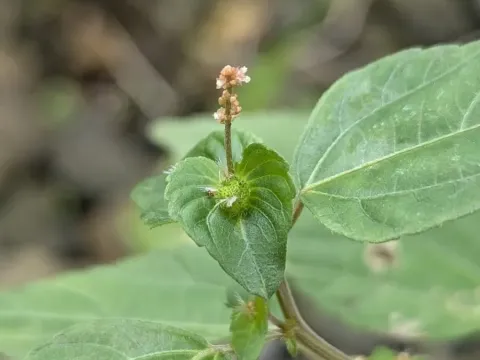
Acalypha australis
Acalypha australis
Acalypha australis is a warm-season annual herbaceous plant; its germination begins in the spring and summer when soil temperatures reach 12-15 degrees Celsius.
What the section contains
Acalypha australis
Seed germination occurs over an extended period, which provides the species with high survival rates even during variable weather conditions at the start of the season.
Seeds maintain viability in the soil for several years, creating a persistent seed bank that requires a long-term strategic approach for effective management.
The mass emergence of seedlings often coincides with the sowing of spring crops, creating severe competition for water and essential soil nutrients early in development.
Optimal timing for suppression includes pre-sowing cultivation and the application of herbicides during the cotyledon stage or the first pair of true leaves.
Belonging to the Euphorbiaceae family, this plant is an aggressive weed capable of adapting to various soil types, ranging from sandy to heavy loam compositions.
The plant thrives in well-lit areas but exhibits significant shade tolerance, allowing it to successfully develop in the inter-row spaces of wide-row crops.
As a moisture-loving species, it is frequently found in irrigated lands, paddy fields, and river floodplains, where high soil moisture supports vigorous vegetative growth.
Acalypha australis easily withstands soil compaction and human agricultural activity, rapidly colonizing disturbed lands and field margins.
Climatic requirements are defined by the need for a long, warm growing season to produce mature seeds, making it a particular concern in warmer agricultural regions.
The primary concern is the plant's high seed production capacity, as a single plant can produce thousands of small seeds that rapidly infest the topsoil layer.
Acalypha australis often serves as an intermediate host for various viral and fungal pathogens, which can then be transmitted to high-value cultivated crops.
In soybean and corn fields, the plant acts as a strong competitor, reducing total crop yield by suppressing the root system development of the main crop.
Pests specific to the Euphorbiaceae family may migrate from the weed to agricultural crops, significantly increasing the costs associated with plant protection.
Chemical control requires the use of specialized herbicides, as the plant demonstrates some natural resistance to several common broad-spectrum products.
The presence of Acalypha australis in the harvest is highly undesirable, as it complicates the threshing process and the physical cleaning of the grain.
Large quantities of vegetative mass within field crops increase the moisture content of the harvested grain heap, leading to higher energy consumption during drying.
Mechanical cleaning of post-harvest grain is performed using specialized screens and separators calibrated precisely to the size of Acalypha seeds.
Timely eradication of weed patches before seed maturity is a critical stage in preventing the further spread of this invasive plant throughout the farm.
Disposal of post-harvest residues contaminated with Acalypha seeds must be conducted away from cultivated land to minimize the risk of recurring infestations.