
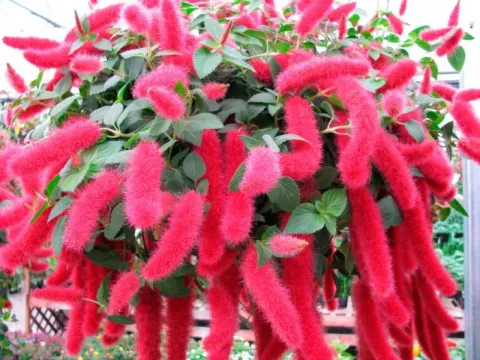
Acalypha
Acalypha hybrids
Acalypha hybrids belong to the Euphorbiaceae family, widely recognized for their stunning ornamental foliage and unique inflorescences. Originating from tropical regions, these plants require specific environmental conditions to thrive in cultivation.
What the section contains
Acalypha
For successful growth, the ambient temperature should remain consistently between 20°C and 25°C. During the winter season, it is crucial to keep the plant in a warmer environment, ideally not dropping below 16°C to prevent stress.
The substrate for Acalypha should be nutrient-rich, airy, and well-draining. A professional soil mix typically consists of equal parts peat, leaf mold, and coarse sand to ensure optimal root health and proper water management.
Lighting requirements are significant for maintaining the plant's decorative color. Acalypha prefers bright, indirect sunlight throughout the year; insufficient light often leads to leggy growth and fading of the vibrant leaf coloration.
Watering must be frequent but balanced. It is essential to keep the soil moist without creating waterlogged conditions. Using soft, room-temperature water is recommended to avoid chemical buildup and cold shock to the root system.
Common pests that affect Acalypha include spider mites, aphids, and whiteflies. These insects often colonize the underside of leaves, necessitating regular monitoring and appropriate horticultural oil or insecticidal soap applications.
Fungal diseases are usually associated with poor ventilation and overwatering. If stems become soft or black, immediate action involving soil replacement and fungicide treatment is required to save the plant from collapse.