
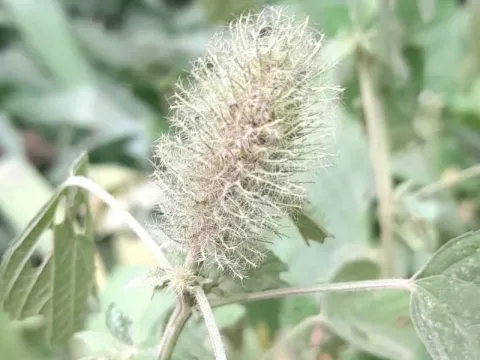
Acalypha alopecuroides
Acalypha alopecuroides
Acalypha alopecuroides belongs to the Euphorbiaceae family. This annual herbaceous plant naturally thrives in well-warmed areas with adequate moisture levels.
What the section contains
Acalypha alopecuroides
For successful seed germination, the soil must be prepared and warmed to a temperature of at least 18-20°C. Sowing in open ground is carried out only after the danger of night frosts has passed, as the crop is sensitive to cold.
In research or agricultural practice, a seedling method is recommended to shorten the vegetative period. Seeds are sown in a nutrient-rich substrate with high humus content during March or April.
The sowing depth is 0.5–1 cm. Seedlings typically appear 10–14 days after sowing, provided that soil moisture and diffused sunlight are consistently maintained.
Once seedlings reach the 3-4 true leaf stage, they are transplanted into individual containers or spaced out to a final position at least 30 centimeters apart.
The plant requires a sunny location, although in regions with extremely hot climates, light shade during midday hours is necessary to prevent leaf scorching.
Soils must be light, well-drained, and have a slightly acidic or neutral pH. Heavy clay soils without structural improvement can lead to waterlogging and root system decay.
Acalypha alopecuroides has high watering requirements; the soil should remain consistently moist. Drying out the root zone leads to leaf shedding and reduced overall plant vitality.
During the active growth phase, the crop requires regular feeding with complex mineral fertilizers, focusing on nitrogen to promote vegetative mass development.
Maintaining optimal air humidity is crucial for normal development, as dry air in greenhouses or indoor environments often triggers pest infestations.
The primary pests affecting this species are spider mites and whiteflies, which proliferate rapidly in low-humidity conditions.
Improper irrigation and poor soil aeration can lead to root rots caused by fungal pathogens such as Pythium or Rhizoctonia species.
Powdery mildew represents another significant threat, manifesting as a white fungal layer on leaves during sudden temperature fluctuations and poor ventilation.
Control strategies include the use of systemic insecticides against pests, while fungal diseases are managed with copper-based fungicides or specialized biological controls.
Regular monitoring of plant beds and strict adherence to sanitary agricultural practices are essential to minimize the risk of widespread disease or pest outbreaks.