
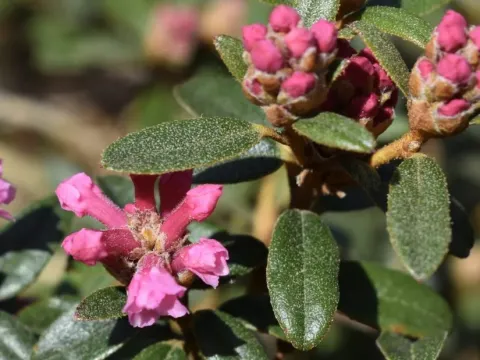
Rhododendron trichostomum
Rhododendron trichostomum
Rhododendron trichostomum is a distinctive evergreen shrub belonging to the Ericaceae family, native to the high-altitude regions of Tibet and the Chinese provinces of Yunnan and Sichuan. It thrives naturally in rocky crevices and alpine meadows at elevations up to 4,000 meters, showing remarkable resilience.
What the section contains
Rhododendron trichostomum
Botanically, it is characterized by its small, narrowly lanceolate leaves covered in fine hairs and its dense, ball-shaped inflorescences. The flowers are typically tubular-campanulate in shape and often emit a subtle scent, making this species a highly valued specimen for collectors of alpine flora.
Cultivation success relies on providing an acidic, well-drained growing medium, rich in organic matter like pine bark or leaf mold. Drainage is the single most important factor, as the species is highly susceptible to root decay if water is allowed to pool around the base of the plant.
The climate requirements involve a preference for cool, humid conditions with filtered light rather than direct, harsh sunlight. In domestic gardens, it is best suited for rock gardens, trough plantings, or specialized heather gardens where the microclimate can be strictly managed to favor its alpine nature.
Maintenance consists of keeping the root zone consistently moist but never waterlogged and applying a top dressing of acidic mulch annually. Occasional light pruning of faded flower clusters is beneficial to maintain the compact habit and improve the air circulation within the shrub canopy.
The primary threats include fungal pathogens such as Phytophthora, which occur in poorly drained soils. Pests such as rhododendron lace bugs and spider mites are common enemies of this species, often necessitating integrated pest management approaches to maintain foliage health throughout the growing season.