
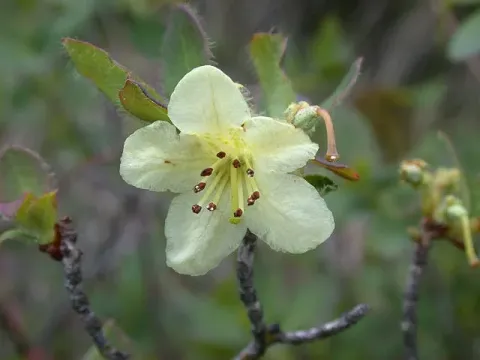
Rhododendron trichocladum
Rhododendron trichocladum
Rhododendron trichocladum is an ornamental shrub belonging to the Ericaceae family. Known for its distinct botanical characteristics, this species is highly valued for its compact growth habit and elegant flowering displays.
What the section contains
Rhododendron trichocladum
The plant originates from the mountainous regions of Southwest China, specifically Yunnan and Sichuan. It is naturally adapted to high-altitude environments characterized by cool temperatures and significant atmospheric humidity.
To ensure healthy growth, the plant requires well-drained, acidic soil with a pH ranging between 4.5 and 5.5. Incorporating organic matter such as peat moss or pine needles is essential to replicate its native growing conditions.
Site selection is critical, as this species thrives in partial shade. Direct exposure to intense sunlight can damage foliage, so positioning the plant under the light canopy of trees is highly recommended.
Consistent moisture is key for this species. During dry spells, supplemental irrigation is necessary to prevent stress, although gardeners must be careful to avoid waterlogged soil, which can lead to root suffocation.
The main threats to Rhododendron trichocladum include fungal diseases such as Phytophthora root rot and powdery mildew. These issues are often exacerbated by poor soil aeration and excessive humidity around the root zone.
Pests that commonly affect this shrub include spider mites and rhododendron bugs. These insects feed on the leaves, leading to chlorosis, discoloration, and overall decline in plant vigor if left untreated.
Integrated pest management, including regular inspection of the leaves and stems, is recommended. Early intervention with suitable fungicides and insecticides can effectively prevent significant damage to the plant.
Nutrient deficiency, particularly iron chlorosis, can occur if the soil pH deviates from the required acidic range. Regular soil testing and the use of acid-loving plant fertilizers are essential for maintenance.
Proper hygiene, such as removing fallen leaves and pruning dead wood, helps reduce the likelihood of pest infestations and fungal spores buildup in the garden environment.