
Nevada jointfir
Ephedra nevadensis
Description
Growing requirements
Nevada jointfir is a perennial evergreen shrub belonging to the Ephedraceae family. It is a highly specialized plant adapted to the arid and semi-arid conditions of the Southwestern United States.
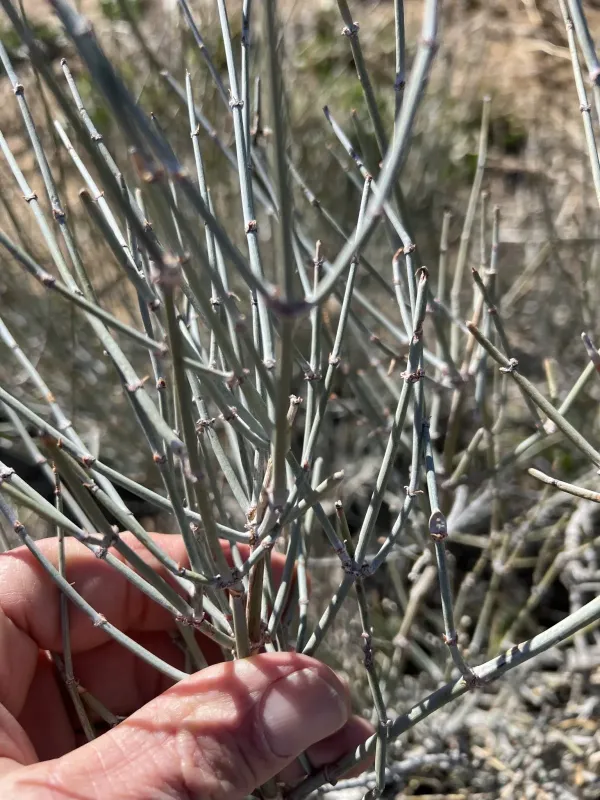
The plant is biologically distinguished by its photosynthetic stems, which are jointed and green, replacing the function of typical leaves. This morphological trait is an evolutionary adaptation to survive extreme water scarcity.
Soil requirements for this species are specific: it thrives in well-draining, sandy, or rocky soils. It is native to desert scrub communities and high-mountain desert ecosystems where water retention is low.
The species requires full sun exposure to flourish. It does not tolerate shade or high-humidity environments, which can negatively impact its secondary metabolite production and overall growth vigor.
In terms of agricultural management, irrigation should be strictly limited to the establishment phase. Once the root system is fully developed, Nevada jointfir is virtually maintenance-free and drought-tolerant.
Main diseases and pests
Nevada jointfir is generally resilient to pests, though it may occasionally be affected by spider mites in crowded greenhouse conditions.
Root rot is the most significant threat to this culture, usually caused by improper soil selection or over-irrigation in poorly draining environments.
Fungal pathogens may compromise the stems if the plants are placed in areas with insufficient air circulation or high moisture content.
Herbivory by rodents can occur in wild or peripheral populations, particularly during harsh winters when other food sources are scarce.
Integrated pest management should focus on prevention through soil preparation and ensuring a dry, open environment for the shrubs.