
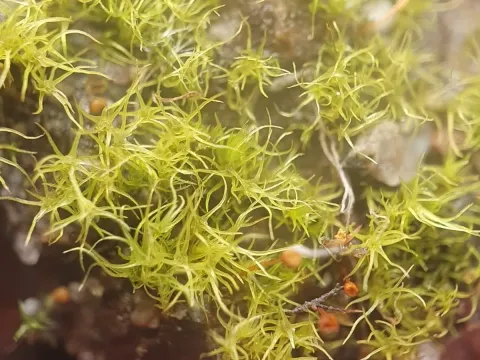
Trichodon cylindricus
Trichodon cylindricus
Trichodon cylindricus is a small acrocarpous moss belonging to the Dicranaceae family. While it is not a cultivated agricultural crop, it serves as an important ecological indicator species in damp and disturbed soil environments.
What the section contains
Trichodon cylindricus
The species primarily colonizes bare, moist clay or loamy soils. It is frequently observed in open habitats such as roadside banks, forest clearings, or along the margins of seasonally fluctuating water bodies, where competition from vascular plants is minimal.
Climatically, this moss thrives in temperate regions characterized by high atmospheric humidity and moderate temperatures. It is highly sensitive to desiccation, requiring a consistently moist substrate to support its physiological processes and reproductive cycles.
Botanically, Trichodon cylindricus is distinguished by its small tufts and characteristic cylindrical capsules that stand on straight stems. Its slender leaves are often curved, an adaptation that maximizes the interception of surface moisture and dew in its micro-habitat.
In terms of ecological role, this species acts as a stabilizer for raw soil surfaces. By forming thin mats, it protects the soil crust from immediate erosion, thereby facilitating the subsequent establishment of more complex plant communities in successional processes.
Intensive agricultural practices represent the most significant threat to the survival of Trichodon cylindricus. Constant soil cultivation and tillage permanently disrupt its delicate structure, preventing the establishment of the moss colony.
Chemical weed control measures are detrimental to this species. The application of herbicides or fungicides alters the soil chemistry and surface conditions, leading to the rapid decline and eradication of local populations within treated areas.
Land drainage and hydrological interventions significantly impact its habitat. Since the moss depends on high moisture levels, any activities that lower the water table or drain nearby wetlands drastically reduce its chance of survival.
Competition from aggressive, fast-growing weeds and invasive plant species poses a constant risk. As vegetation coverage increases on previously bare ground, Trichodon cylindricus is typically shaded out, as it cannot compete for light and space.
Environmental pollution and the acidification of soil can further suppress its growth. Maintaining populations requires protecting the integrity of micro-habitats and ensuring that there is minimal mechanical or chemical disturbance to the ground layer.