
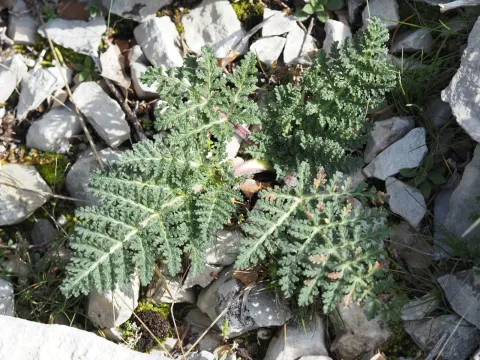
Distichoselinum
Distichoselinum
Distichoselinum is a genus of perennial herbaceous plants belonging to the Apiaceae (umbelliferous) family. As a monotypic genus, it is primarily native to the Iberian Peninsula, where it has adapted to specific xerophytic conditions typical of Mediterranean landscapes.
What the section contains
Distichoselinum
The plant exhibits high drought tolerance, which is a key characteristic of its biological strategy. It thrives in open, sunny environments where traditional water-demanding crops might struggle, making it an object of interest for research into arid-land agriculture.
Regarding soil requirements, Distichoselinum prefers well-drained, porous substrates, ideally with a neutral to slightly alkaline reaction. It is particularly well-suited to stony or calcareous soils, where its deep root system can effectively penetrate the substrate to access stable moisture levels.
Cultivation of this species requires careful management of humidity levels. While established plants are resilient, seedlings require moderate moisture to develop their primary taproot, after which they become highly resistant to dry environmental conditions.
Economically, while Distichoselinum is not widely cultivated as a primary crop, it holds significant value as a reservoir of genetic traits for drought resistance within the Apiaceae family. Its potential uses extend to phytoremediation and potential pharmacological research due to the complex secondary metabolites found in related species.