
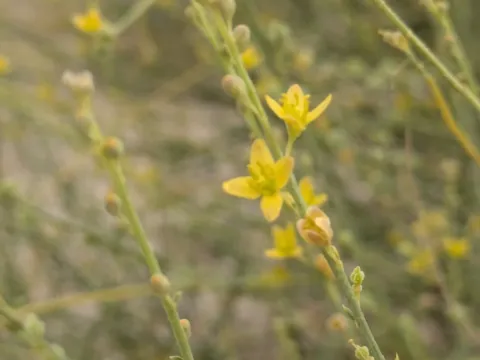
Dipterygium
Dipterygium
Dipterygium, specifically Dipterygium glaucum, is a hardy perennial shrub belonging to the Capparaceae family, perfectly adapted to the harsh conditions of desert ecosystems.
What the section contains
Dipterygium
It thrives in sandy and rocky soils where nutrient levels are minimal, showcasing exceptional tolerance to the physiological challenges of arid environments.
The plant requires high solar irradiance to complete its lifecycle and exhibits a remarkable resistance to high temperatures that would desiccate typical crops.
Salinity tolerance is one of the key agronomic advantages of this plant, allowing it to colonize saline patches where other species fail to establish.
Its root system is designed for deep water extraction, making the species an ideal candidate for soil stabilization and environmental restoration in arid regions.
Sowing Dipterygium is best timed to coincide with seasonal rainfall events, which naturally signal the dormancy-breaking period for the seeds.
Seeds should be planted at a shallow depth, as the small size of the seeds provides limited energy for emergence through dense soil layers.
For cultivation purposes, pre-treatment of seeds might be necessary to break internal dormancy, ensuring a more uniform germination rate across the field.
Planting density should be kept relatively low to minimize resource competition, especially in areas where annual rainfall is highly unpredictable.
After sowing, minimal intervention is required; the focus should remain on protecting the area from human disturbance to allow the seedlings to establish.
While the total biomass yield of Dipterygium is lower than that of irrigated fodder crops, it provides critical feed during extreme drought periods.
The value of the plant lies in its availability when other more palatable species have perished or entered complete dormancy due to a lack of water.
Grazing efficiency is high among desert-adapted livestock such as camels and goats, which consume both fresh foliage and dry stems during the off-season.
Under controlled research conditions with supplemental drip irrigation, vegetative growth can be significantly boosted, though this is rarely viable on a large scale.
Harvesting for fodder is often performed by controlled rotational grazing rather than mechanical cutting to maintain the plant's health and longevity.
The primary threat to Dipterygium populations is overgrazing, which prevents the plants from reaching the maturity required for seed production.
The plant is naturally resistant to most insect pests due to the chemical composition of its tissues, which acts as a deterrent against herbivory.
Root rot caused by excessive humidity or poor soil drainage is the most significant disease risk, which can be mitigated by careful site selection.
Human activities, such as off-road driving and urban expansion, lead to soil compaction and destruction of natural habitats, posing a threat to wild stands.
Wind erosion is a secondary challenge, as the loss of topsoil can expose the shallowest roots to extreme heat, leading to plant mortality.
Harvesting Dipterygium requires a careful approach to ensure that the crown of the shrub remains intact for subsequent regrowth in following seasons.
If cutting is necessary, selective pruning of the older stems is recommended, allowing the plant to concentrate energy on new, nutrient-rich shoots.
Seed collection involves gathering the pods before they undergo full dehiscence, which is a common mechanism for seed dispersal in desert plants.
Post-harvest management should focus on drying the foliage in a shaded area to preserve essential nutrients and prevent degradation by ultraviolet rays.
Once dry, the forage should be bundled and stored in a cool, well-ventilated location to prevent mold and sustain its quality for long-term use.