
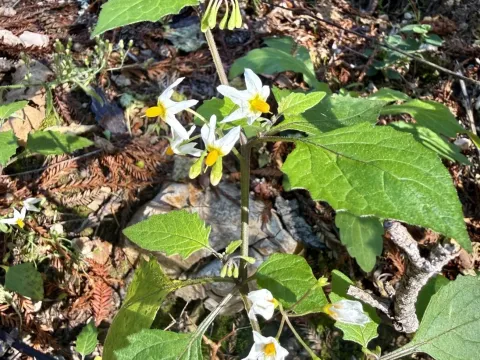
Douglas nightshade
Solanum douglasii
Douglas nightshade, scientifically known as Solanum douglasii, is a perennial plant belonging to the Solanaceae family. Native to western North America, including parts of California and Mexico, it is a hardy species that occupies a variety of ecological niches, often thriving in disturbed soils.
What the section contains
Douglas nightshade
The propagation of this species is typically achieved through seeds, which require consistent moisture and moderate temperatures to germinate successfully. In a controlled agricultural setting, sowing is best performed in early spring using a well-draining seed-starting mix to ensure high emergence rates.
Once the seedlings have developed their true leaves, they should be transplanted to a location that accommodates their spreading habit. Proper spacing is essential, as the plants can grow into substantial, bushy structures that require sufficient airflow to remain healthy and vibrant throughout their growth cycle.
Biologically, Solanum douglasii is characterized by its dark green foliage and small, clustered berries that ripen to a dark purple or black color. Understanding its life cycle, which includes periods of active vegetative growth followed by flowering and fruit set, is crucial for effective management.
Farmers should approach the introduction of this crop with a clear plan regarding density and layout. By optimizing the planting grid, growers can maximize the use of the available space, reduce inter-plant competition, and facilitate easier monitoring of plant health throughout the season.
Douglas nightshade thrives in full sun to partial shade environments. While it is adaptable to various light conditions, those grown in brighter locations generally exhibit more vigorous growth and a more compact form, provided that water needs are adequately met to prevent dehydration during peak heat.
The soil requirements for this plant focus on drainage. It performs best in fertile, loamy soils that can retain moisture without becoming waterlogged. If the soil is heavy clay, incorporating organic matter such as compost can significantly improve its texture and nutrient availability for the plant.
Watering frequency should be moderate, mimicking the natural precipitation patterns of its native range. During the peak of summer, consistent moisture is necessary for fruit production, but growers must avoid surface irrigation that leaves the leaves wet, as this invites fungal pathogens to colonize the foliage.
Temperature tolerance is a key factor in the successful cultivation of this nightshade. It prefers temperate climates and may require protection during extreme winter frosts. In areas with volatile spring weather, using frost blankets can safeguard the young plants until conditions become consistently warmer.
Nutrient management is also a component of its success. Applying a balanced, slow-release fertilizer at the start of the growth season provides the essential macronutrients needed for foliage development. Soil testing is recommended to ensure that pH levels remain within the slightly acidic to neutral range.
Like many members of the Solanaceae family, Solanum douglasii is susceptible to a range of pests and diseases that can impede its development. Early detection is the cornerstone of effective disease management, requiring regular scouting of the field to identify initial signs of distress.
Fungal diseases, particularly those affecting the root and stem, are common in poorly drained or overly humid conditions. Phytophthora and other blights can cause rapid decay, making it essential to prioritize preventative measures such as proper irrigation scheduling and field sanitation.
Insect pests, including aphids and spider mites, are frequent visitors to these plants. These insects damage the plant by feeding on its sap, which causes leaf curling, yellowing, and a reduction in overall vigor. Using integrated pest management (IPM) strategies, including beneficial insects, can help control these populations.
- Late blight: causes dark, water-soaked spots on foliage.
- Aphids: clusters of small insects found on new plant growth.
- Spider mites: small pests that create fine webbing on leaves.
- Root rot: occurs when the soil remains saturated for too long.
Effective mitigation requires removing and destroying infested plant material immediately to prevent the spread of pathogens to healthy neighbors. By keeping the growing area free of debris and maintaining good air circulation, growers can significantly lower the risk of severe infestations.