
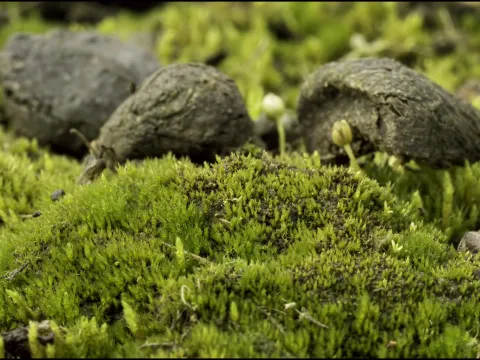
Ditrichum cornubicum
Ditrichum cornubicum
Ditrichum cornubicum is a rare moss species belonging to the Ditrichaceae family. It is not an agricultural crop but is a significant botanical subject, particularly noted for its extreme habitat specialization in Cornwall, UK.
What the section contains
Ditrichum cornubicum
The species is primarily found in areas with high concentrations of heavy metals, specifically copper and tin, which are typically toxic to most other plant life. These metalliferous substrates provide a unique niche where the moss faces little competition.
Botanically, this moss forms small, compact tufts or patches. Its morphology is adapted to survive on disturbed ground, such as disused mine tailings, where it successfully anchors itself to sparse, rocky, and chemically challenging soil.
Climatic requirements involve stable, humid, and temperate conditions consistent with the Atlantic influence. Constant moisture is essential for its survival, as the plant lacks the complex vascular tissues required for significant water storage.
Agronomical or horticultural cultivation is virtually non-existent for this species. Instead, conservation efforts focus on site preservation, protecting existing colonies from physical disturbance and maintaining the specific soil chemistry they require.
The primary threat to Ditrichum cornubicum is the destruction of its niche habitats. As many of these sites are former industrial zones, land redevelopment or land-clearing projects can eliminate populations entirely.
Invasive plant species pose a major competitive threat. If soil chemistry shifts or environmental conditions improve, more vigorous species may invade, displacing the slow-growing Ditrichum moss.
Climate change, manifesting as prolonged summer droughts, presents a severe risk. Mosses rely heavily on ambient humidity and occasional rainfall to complete their lifecycle, and dehydration is often fatal to the gametophytes.
Atmospheric pollution can alter the pH balance of the soil surface. This chemical shift can interfere with the delicate balance required for the species to tolerate the presence of heavy metals, leading to rapid colony decline.
The extreme fragmentation of its limited population makes the species highly vulnerable to local stochastic events. A single development project or environmental disaster in its primary range could lead to the extinction of the species.