
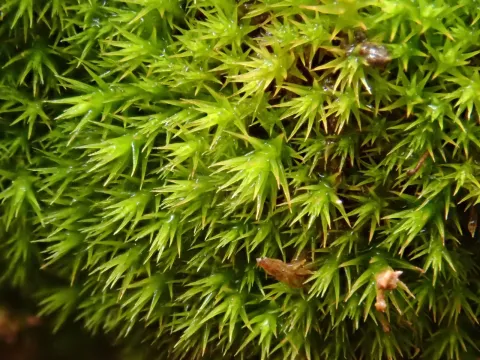
Cheilothela chloropus
Cheilothela chloropus
Cheilothela chloropus is a member of the Pottiaceae family, a group of mosses known for their resilience and ability to colonize challenging environments. While not classified as a commercial crop, its ecological presence is significant in various natural habitats.
What the section contains
Cheilothela chloropus
The plant thrives in open, sun-exposed areas where it can capture sufficient solar energy. It exhibits a distinct preference for sites with episodic moisture, making it highly adaptive to Mediterranean-type climates with distinct dry and wet seasons.
Soil requirements for this species typically include well-drained, neutral to alkaline substrates. It is frequently observed on rocky slopes, in crevices, or on disturbed ground where competition from taller, vascular plants is limited.
The distribution of Cheilothela chloropus is largely centered around temperate zones and Mediterranean regions. Its ability to withstand desiccation allows it to survive periods of intense heat and lack of rainfall that would prove fatal to many other species.
Botanically, the species is characterized by specialized leaf structures designed for rapid water absorption. Its physiological mechanisms enable it to enter a state of dormancy during extreme conditions, resuming metabolic activity quickly upon rehydration.