
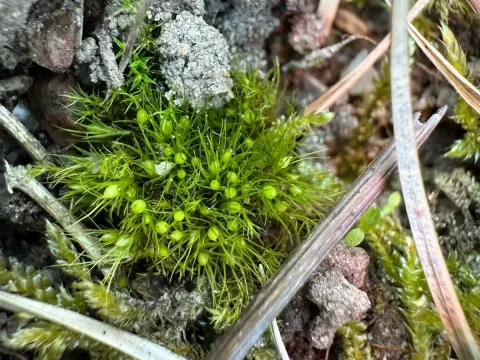
Pleuridium subulatum
Pleuridium subulatum
Pleuridium subulatum is a member of the Dicranaceae family, representing a small but ecologically significant type of moss. Unlike agricultural crops, it lacks a vascular system and relies on simple absorption to obtain nutrients and moisture from its immediate environment.
What the section contains
Pleuridium subulatum
Botanically, this species is recognized by its minute, subulate leaves and a delicate growth habit. It grows in small, dense tufts, often barely noticeable to the untrained eye, and plays a role in early successional stages on disturbed soil.
The plant is typically found in open, moist environments including fields, pastures, and fallow land. It requires consistent moisture levels to remain active and to complete its reproductive cycle through spore production.
In terms of soil requirements, it favors damp, mineral-rich substrates that are not heavily compacted. While it can survive on various soil types, a neutral to slightly acidic pH range is generally considered optimal for the development of its protonema.
As an agricultural occupant, its presence is often an indicator of soil surface stability and the absence of high-intensity agricultural activities. It provides a foundational layer that helps prevent surface erosion on non-cultivated plots.
The primary threat to Pleuridium subulatum in agricultural settings is the application of synthetic herbicides. These chemicals are designed to target plant metabolic processes and effectively eliminate bryophyte colonies alongside invasive weeds.
Intensive soil tillage, such as moldboard plowing, disrupts the surface layer where Pleuridium subulatum anchors its rhizoids. This process destroys established colonies and buries spores, preventing natural regeneration.
Heavy use of mineral fertilizers can lead to chemical stress. High concentrations of nitrogen, phosphorus, and potassium often alter the pH or osmotic pressure of the soil solution, which the delicate structure of the moss cannot tolerate.
Competition from vigorous annual or perennial weeds is a significant limiting factor. As a pioneer species, this moss lacks the height and biomass to compete for sunlight when other vegetation grows densely over it.
Changes in local hydrology, such as drainage for irrigation or industrial development, significantly impact its survival. Prolonged periods of aridity or excessive salinity in the soil are detrimental to the species' survival and reproduction.