
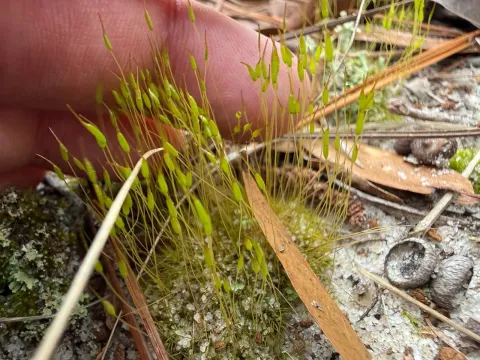
Ditrichum pallidum
Ditrichum pallidum
Ditrichum pallidum is a moss species belonging to the Ditrichaceae family within the division Bryophyta. While not a commercial agricultural crop, it holds significant ecological value as a primary colonizer of bare soil surfaces.
What the section contains
Ditrichum pallidum
The species is widely distributed throughout temperate regions of the Northern Hemisphere. It typically thrives in well-drained, acidic to neutral soil environments, frequently appearing on sandy banks, disturbed soils, and open forest clearings.
Botanically, it is recognized by its distinct pale yellow to golden sporophytes that rise above the dense, carpet-like turf. The leaves are narrow and lanceolate, allowing the moss to form compact mats that minimize evaporative water loss.
The plant exhibits remarkable resilience to drought, employing a physiological dormant state during dry periods. It prefers sunny or partially shaded environments where competition from higher vascular plants is limited.
In natural systems, it acts as a soil stabilizer. Its rhizoid network is essential for binding loose particles, which prevents erosion and facilitates the initial stages of successional plant growth.
The primary threats to Ditrichum pallidum are habitat degradation and soil chemical changes caused by human activity. Excessive use of nitrogenous fertilizers in nearby fields often leads to overgrowth by competitive grasses, which shade out the moss.
Physical disturbance of the soil crust, caused by heavy machinery or frequent foot traffic, can dismantle the moss colony. Air pollution, specifically high levels of sulfur dioxide, significantly impacts the health and spore production of this species.
There are no major pests that target this moss specifically. However, under conditions of prolonged waterlogging, fungal pathogens can infect the base of the stems, leading to decay of the gametophyte tissue.
Pest management is generally not required for wild populations, as the moss has evolved natural defenses. In artificial culture, however, maintaining proper ventilation and drainage is crucial to prevent the onset of fungal diseases.
Due to its high sensitivity to atmospheric contaminants, Ditrichum pallidum is frequently studied by botanists as a bioindicator. Its decline in a specific area serves as an early warning sign of deteriorating environmental quality.