
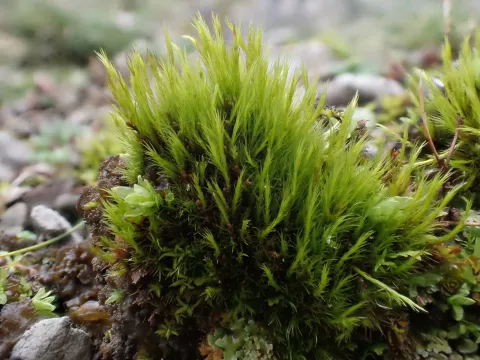
Ditrichum flexicaule
Ditrichum flexicaule
Ditrichum flexicaule is a perennial moss species belonging to the Ditrichaceae family. It is characterized by dense, often yellowish-green tufts and slender stems that exhibit a unique curved growth pattern, making it a distinct feature in specialized ecological niches.
What the section contains
Ditrichum flexicaule
This moss is naturally distributed across the temperate and arctic regions of the Northern Hemisphere. It is strongly calciphilous, meaning it prefers growing in calcareous habitats, such as limestone outcroppings, rocky crevices, and mineral-rich gravelly soils.
The climate requirements involve a preference for cool to moderate temperatures and high atmospheric humidity. While it is tolerant to short-term drought, it thrives best in environments where moisture levels remain consistent throughout the growing season without waterlogging.
Agronomic management of this species focuses on replicating its natural substrate conditions. Cultivation should be carried out in well-drained media with a neutral to slightly alkaline pH, ensuring that essential minerals like calcium are present in the soil mix.
In terms of хозяйственное (economic) utility, it is primarily used in specialized landscaping, such as rock gardens and alpine installations. It serves as an effective soil stabilizer, preventing erosion and providing a refined, natural texture to garden surfaces.
The primary threats to Ditrichum flexicaule include air pollution and the accumulation of heavy metals, which the plant absorbs readily from the atmosphere. High levels of sulfur dioxide can significantly reduce the vitality of moss colonies.
Competitive exclusion by vascular plants is another major threat. If the soil becomes too fertile, faster-growing grasses and weeds will quickly overtop the moss, depriving it of the light and space required for its slow vegetative growth.