
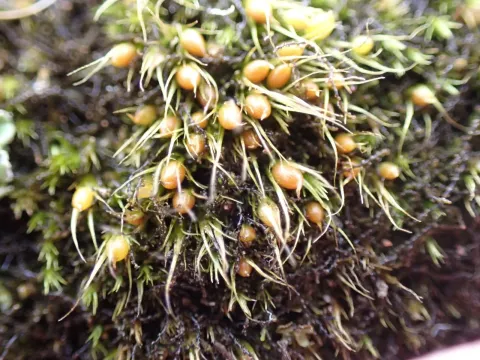
Pleuridium acuminatum
Pleuridium acuminatum
Pleuridium acuminatum is not an agricultural crop but a species of moss that reproduces via spores. Therefore, standard agricultural sowing dates are not applicable to this botanical object.
What the section contains
Pleuridium acuminatum
The life cycle of this moss begins with the dispersal of spores, which usually occurs in the spring and early summer when moisture levels are sufficient for development.
In nature, the colonization of bare soil by this species happens spontaneously. The spores settle on suitable substrates and develop into a protonema, from which the gametophyte arises.
Successful colonization requires open, undisturbed areas where the lack of competition from vascular plants allows the moss to establish its tiny colonies.
Belonging to the Ditrichaceae family, this species serves as a pioneer plant, often being one of the first to occupy mineral-rich, exposed ground surfaces.
The plant thrives in habitats with moderate moisture levels, typically found on loamy or sandy soils that remain exposed to light throughout the day.
It prefers neutral to slightly acidic pH levels in the soil substrate. It is highly adapted to disturbed environments, such as forest trails and cleared areas.
Light availability is a critical requirement for Pleuridium acuminatum. As a light-demanding species, it cannot compete in areas with dense vegetation or thick canopy cover.
Temperature requirements are consistent with temperate climate zones, though the species exhibits a remarkable ability to tolerate periods of moderate drought through dormancy.
Adequate soil aeration is necessary for the development of its rhizoids, allowing the moss to maintain its structure on sloping terrains or unstable ground.
Environmental pollutants, including chemical pesticides and industrial runoff, pose the most significant threat to the survival of Pleuridium acuminatum populations.
The rapid encroachment of invasive weeds and shrubs is a major factor in the decline of this moss, as they create excessive shade and compete for space.
Mechanical disturbance, such as intense soil compaction by heavy machinery, can effectively destroy the delicate gametophytes of this species.
While Pleuridium acuminatum has few traditional pests, changes in soil microfauna and nutrient balance can indirectly impact its ability to anchor and grow.
Climate change, manifesting as long-term shifts in precipitation patterns, can disrupt the moisture-dependent stages of the moss's reproductive cycle.