
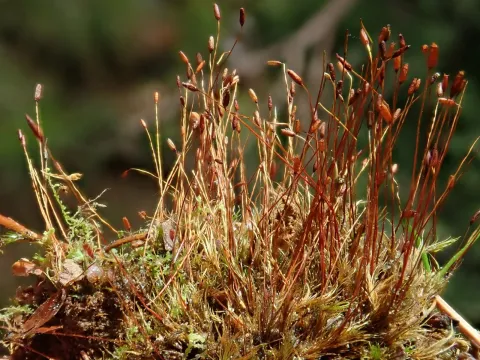
Ditrichum heteromallum
Ditrichum heteromallum
Ditrichum heteromallum is a perennial moss species belonging to the Ditrichaceae family. It is recognized for its ability to colonize disturbed, open substrates, which makes it a crucial pioneer species in primary succession processes.
What the section contains
Ditrichum heteromallum
The species forms loose, yellow-green to dark green turfs. Its botanical structure includes lanceolate leaves that are specifically adapted to endure varying moisture conditions, effectively preventing excessive evaporation in temperate climates.
Regarding soil requirements, it thrives in well-drained, acidic to neutral soils, including sandy banks, tracks, and soil slopes. It is highly intolerant of high nitrogen levels, which typically inhibit its growth and encourage competition.
Climate adaptability is one of the key strengths of Ditrichum heteromallum. It is widely distributed across the Holarctic, demonstrating resilience against frost and seasonal temperature fluctuations.
In terms of land management, the species acts as a natural soil binder. By stabilizing fine-grained soil surfaces, it reduces the risk of erosion in areas where agriculture or construction has disrupted the original vegetation cover.
Environmental pollution, particularly nitrogen deposition from fertilizers used in adjacent agricultural lands, poses a significant threat to the survival of this moss species.
Competition from nitrophilous vascular plants is a primary limiting factor. As soil nutrient levels rise, aggressive grasses and weeds quickly replace the moss mats, leading to local extinction of the colony.
Physiological stress caused by sudden changes in water availability can lead to desiccation or, conversely, fungal decay in the lower parts of the moss stems if water remains stagnant.
Mechanical disturbances, such as deep tilling or heavy machinery traffic, directly destroy the delicate structure of the moss turf, preventing its regeneration and colonization of the site.
While traditional pests do not typically affect Ditrichum heteromallum, parasitic fungi outbreaks can occur in overly humid conditions, which disrupts the normal development of the sporophytes.