
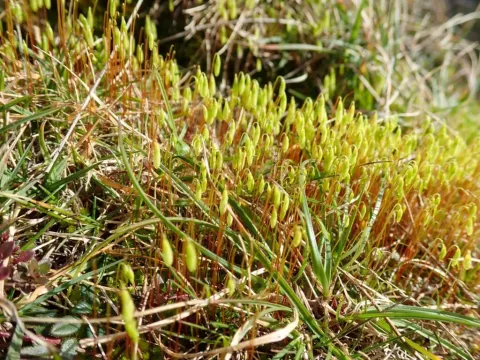
Ditrichum subulatum
Ditrichum subulatum
Ditrichum subulatum is a species of moss belonging to the family Ditrichaceae. It is a non-agricultural plant species found primarily in wild ecosystems, playing a role in stabilizing soil rather than serving as a commercial crop for human or animal consumption.
What the section contains
Ditrichum subulatum
The plant thrives in moist environments, particularly on mineral-rich substrates such as clay banks or disturbed soil surfaces. It requires a stable microclimate characterized by high air humidity and protection from direct, scorching sunlight to prevent the desiccation of its gametophytes.
Regarding soil requirements, this moss prefers slightly acidic to neutral substrates. It is typically found in habitats that have been exposed by natural disturbances, acting as a colonizing species that prepares the ground for more complex plant communities through soil retention.
The botanical structure of Ditrichum subulatum is defined by its small, dense turf-like patches. The leaves are characteristically subulate (awl-shaped), which gives the species its common and scientific names, and possess a distinct midrib structure essential for nutrient and water distribution.
Reproduction occurs via spores produced in capsules mounted on setae. The species does not face threats from traditional agricultural pests or diseases. Its survival is primarily dependent on the maintenance of natural humidity levels and the preservation of pristine, undisturbed ecological micro-habitats.