
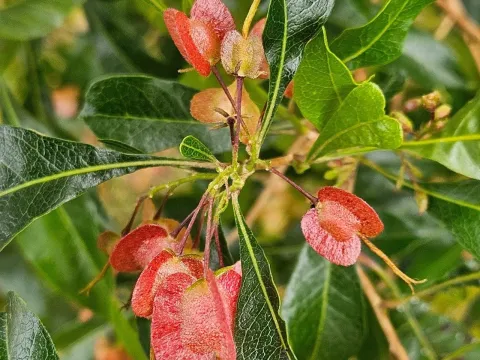
Dodonaea eriocarpa
Dodonaea eriocarpa
Dodonaea eriocarpa is a hardy shrub belonging to the Sapindaceae family. Native to the Hawaiian Islands, this plant has adapted to survive in diverse and often harsh environments, ranging from coastal areas to high-altitude volcanic landscapes.
What the section contains
Dodonaea eriocarpa
The plant is characterized by its leathery, gland-covered leaves, which allow it to retain moisture effectively. It serves as a classic example of a drought-tolerant species that thrives in challenging, nutrient-poor conditions where other plants might fail.
For agricultural success, Dodonaea eriocarpa requires full sun exposure to maintain its structural integrity and health. It is highly intolerant of shade, which can lead to sparse foliage and decreased vigor of the entire shrub.
The ideal soil for this crop is well-drained, sandy, or volcanic soil with a slightly acidic to neutral pH. Proper aeration is crucial; therefore, heavy or compacted soils should be avoided or amended to prevent waterlogging and subsequent root issues.
In practice, the plant is widely recognized for its soil-stabilizing properties. Its root structure is adept at anchoring topsoil on slopes, making it a valuable asset for erosion control projects and sustainable landscape restoration.
Root rot is the most significant threat to Dodonaea eriocarpa, typically caused by improper drainage or excessive irrigation. Once the root system begins to decay, the plant is difficult to save, making preventive water management essential.
Scale insects and mealybugs are the primary pests that affect this species. These insects attach themselves to stems and undersides of leaves, draining sap and weakening the plant, which often leads to secondary infections.
Fungal leaf spot diseases may occur in climates with high humidity or poor air circulation. Implementing adequate spacing between plants during the initial sowing or planting phase is the most effective way to prevent these outbreaks.
Invasive weeds are a major challenge, particularly during the establishment phase. Ensuring the planting site is clear of competing vegetation allows the shrub to develop a deep and resilient root system without nutrient competition.
Mechanical damage to the main stems during maintenance can invite opportunistic pathogens. It is recommended to use sanitized pruning tools and avoid deep cultivation close to the base of the shrub to maintain its overall health.