
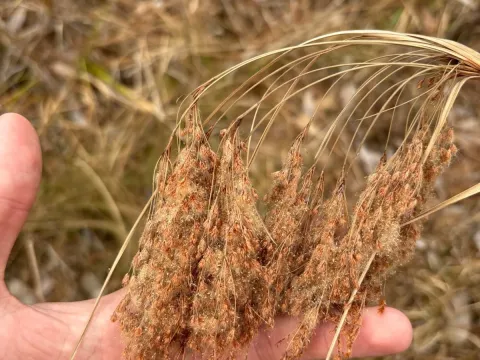
Woolgrass
Scirpus eriophorum
Sowing of Scirpus eriophorum is typically performed in the spring season when soil temperatures reach stable levels sufficient for germination, usually around 15–18°C.
What the section contains
Woolgrass
Seeds benefit significantly from cold stratification, which is an essential pretreatment to break dormancy and ensure uniform emergence across the planting area.
Vegetative propagation via rhizome division is an alternative that often yields faster establishment, especially in sites prone to seasonal water fluctuations.
Shallow planting depth is crucial, as the seeds are light-sensitive and need constant moisture to prevent them from drying out during the initial germination phase.
Maintaining a weed-free environment during the first two months is vital, as slow initial growth makes the young plants vulnerable to competition from more aggressive weeds.
Woolgrass (Scirpus eriophorum), a member of the Cyperaceae family, is a wetland specialist that thrives in saturated soils and shallow water environments.
The plant requires full sun exposure to maximize biomass production, though it shows moderate tolerance to partial shade in specific ecological niches.
Preferring nutrient-rich peat or silty soils, it performs best within a pH range of 5.5 to 7.0, showing a remarkable ability to extract nutrients from the water column.
It is well-suited for temperate regions, demonstrating high resilience to winter conditions and the ability to recover quickly from annual frost cycles.
Due to its dense root architecture, this species is frequently used in erosion control projects and for natural water filtration in agricultural or industrial runoff.
Biomass yield for woolgrass is highly dependent on the fertility of the substrate and the availability of water-borne nutrients, which the plant utilizes efficiently.
In well-managed stands, the plant can produce substantial amounts of organic matter, which can be harvested for fiber applications or used as a soil conditioner.
Optimal productivity levels are usually reached by the third or fourth year of growth, once the underground rhizome mat has fully matured and filled the site.
Sustainable harvesting of the biomass provides a pathway for removing excess nitrogen and phosphorus, contributing to better water quality in adjacent ecosystems.
The fibers produced by the stems have good mechanical strength, making them suitable for traditional basket weaving, paper-like materials, and architectural insulation.
The plant is generally robust and resistant to most diseases, although poor airflow in dense, stagnant conditions may lead to fungal leaf spots or stem blights.
Insects, particularly specialized moth larvae, may occasionally feed on the developing stems, potentially reducing the overall quality of the harvested fiber.
Soil desiccation and extreme water level drops are the primary threats, as the plant relies on a moist root zone to maintain its defense mechanisms against pathogens.
Preventative management involves monitoring water depth and density; thinning overpopulated stands can improve airflow and reduce the risk of localized disease outbreaks.
Chemical control is rarely necessary and often discouraged to maintain the ecological benefits of the wetland habitat where woolgrass is cultivated.
Harvesting should be conducted in late autumn once the plants have entered dormancy and the stems have begun to dry, concentrating nutrients back into the rhizomes.
Specialized low-ground-pressure harvesting equipment is required to operate on the soft, saturated soils typical of woolgrass production sites without damaging the ecosystem.
Immediately after cutting, the biomass must be dried thoroughly to prevent mold and bacterial decay, which can quickly degrade the quality of the organic material.
Proper storage in well-ventilated areas ensures that the harvested material maintains its integrity for secondary processing throughout the winter months.
Systematic harvesting schedules help in maintaining the vigor of the plant bed, ensuring consistent yields in subsequent years without the need for replanting.