
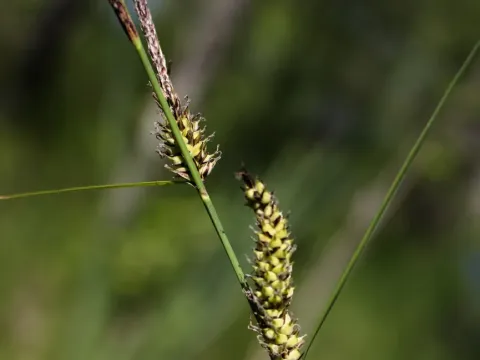
Woolly-fruit sedge
Carex lasiocarpa
Carex lasiocarpa, commonly known as woolly-fruit sedge, is a perennial plant species belonging to the Cyperaceae family. It is widely recognized as a major wetland colonizer, playing a fundamental role in the ecology of various marshy habitats across the Northern Hemisphere.
What the section contains
Woolly-fruit sedge
The species naturally occurs in oligotrophic to mesotrophic peatlands, fens, and along the margins of lakes. It thrives in soils that are characterized by high acidity and low nutrient availability, demonstrating a remarkable ability to survive in waterlogged conditions.
Botanically, it is identified by its long, slender rhizomes and narrow, rigid leaves that often exhibit a glaucous appearance. The plant forms extensive mats, which are vital for soil stabilization and the filtration of water within wetland ecosystems.
Regarding cultivation requirements, the species necessitates a stable hydrologic regime with high water tables. It is typically not cultivated as a conventional crop but rather managed within its natural environment to ensure the health of local wetland biomes and biodiversity conservation.
Economically, Carex lasiocarpa is primarily valued for its ecosystem services, such as carbon sequestration in peatlands and the protection of water resources. In agricultural contexts, it is sometimes assessed as a marginal forage source, although its high fiber content limits its nutritional quality.
The main threats to the survival of Carex lasiocarpa populations include wetland drainage for infrastructure development or agricultural land conversion. Alterations to groundwater levels disrupt the specific moisture balance required for the plant's vegetative propagation.
Various fungal pathogens, particularly those causing leaf spot diseases, can impact the vigor of the plant during stagnant water periods. Additionally, competition from invasive shrub species poses a significant risk to the long-term persistence of its native colonies.