
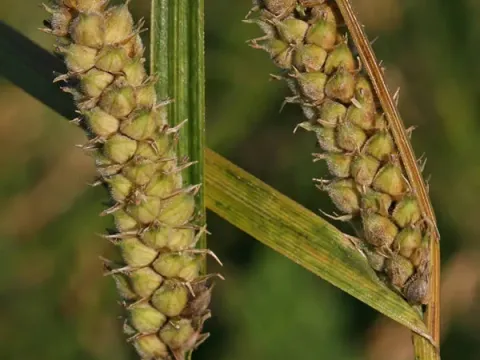
Woolly-fruit sedge
Carex lanuginosa
The woolly-fruit sedge (Carex lanuginosa) is a perennial member of the Cyperaceae family. It is recognized for its significant role in wetland ecosystems and its ability to thrive in moist to wet soil conditions, typically found in North American prairies and marshes.
What the section contains
Woolly-fruit sedge
Morphologically, the plant is characterized by its rhizomatous growth habit, which allows it to form dense colonies. The stems are triangular and erect, typically reaching heights of 30 to 80 centimeters, with narrow, deep-green foliage.
This species requires consistently moist soil conditions to reach its full vegetative potential. It is highly adaptable to various soil types, ranging from silty loams to organic-rich peat soils, provided the moisture levels remain adequate throughout the growing season.
Regarding climatic requirements, the woolly-fruit sedge demonstrates extreme winter hardiness. It is well-suited to temperate climates, as it can withstand cold winters and cool, wet spring conditions without suffering damage to its root system.
In agriculture and land management, this sedge is valued for its soil-binding properties. It serves as an effective vegetation cover for riparian zones, irrigation ditches, and areas prone to seasonal flooding, preventing structural erosion.
Rust fungi are the primary pathogens affecting the woolly-fruit sedge, particularly in years with prolonged spring rains. These infections can decrease the photosynthetic efficiency of the leaves and reduce overall biomass production.
Insect pests, such as leaf-eating larvae and certain types of aphids, may occasionally infest the plants. However, significant economic damage is rare unless the plants are under stress from environmental factors such as severe drought.
Root damage caused by soil-dwelling insects like wireworms can be a localized concern during the establishment phase. Proper site preparation and ensuring the soil remains sufficiently saturated can discourage these pests.
Leaf spot diseases caused by Septoria or other fungal species can occur in dense, poorly ventilated stands. Management strategies emphasize maintaining appropriate plant density and ensuring the site is not stagnant.
Winter mold can sometimes develop on the crowns of the plant if the field is blanketed by heavy, wet snow for extended periods. This is usually not lethal, but it can lead to slower regrowth during the following spring season.