
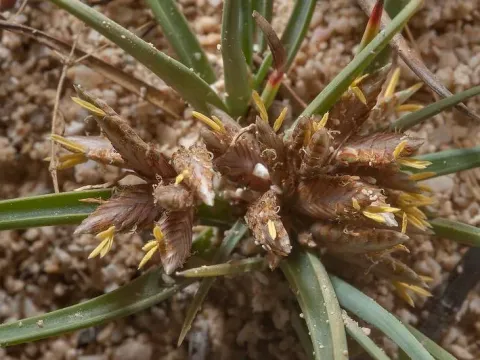
Yemeni flatsedge
Cyperus jeminicus
Yemeni flatsedge (Latin: Cyperus jeminicus) is a perennial herbaceous plant belonging to the Cyperaceae family. It is specifically adapted to surviving in arid and semi-arid environments where water availability is a major constraint.
What the section contains
Yemeni flatsedge
Its natural range is primarily associated with the Arabian Peninsula, where the plant thrives in harsh environmental conditions. The species exhibits significant resilience to extreme heat and solar radiation.
Optimal growth conditions require well-drained sandy or sandy-loam soils. The plant relies on a specialized root system that can reach moisture deep within the soil profile, making it a robust survivor in sandy environments.
The crop requires full sun exposure to maintain high rates of photosynthesis and structural integrity. Poor light penetration through the canopy can lead to chlorosis and stunted development of the aerial biomass.
Economically, Yemeni flatsedge is increasingly recognized for its role in soil stabilization, helping to prevent wind erosion in desertified regions. While not a primary commercial crop, it serves as an important genetic resource for breeding drought-hardy agricultural plants.
The primary threats to Cyperus jeminicus in agricultural settings are fungal infections that occur during occasional rainfall events. High humidity can trigger the rapid development of leaf spots and stem rot.
Pests such as various grasshopper species and stem-boring insects pose a significant risk by consuming the energy-rich internal tissues of the stem. These pests can rapidly decrease plant vigor if left unmanaged.
Soil-borne pathogens and nematodes are persistent issues, especially when the plant is grown in monoculture. These organisms target the root system, reducing the plant's ability to uptake water and essential minerals.
Integrated pest management strategies are recommended, focusing on maintaining soil health and providing proper drainage to reduce the conducive environment for pathogens.
Regular field scouting is essential to identify early symptoms of disease or infestation, allowing for targeted intervention before the damage affects the entire stand of the crop.