
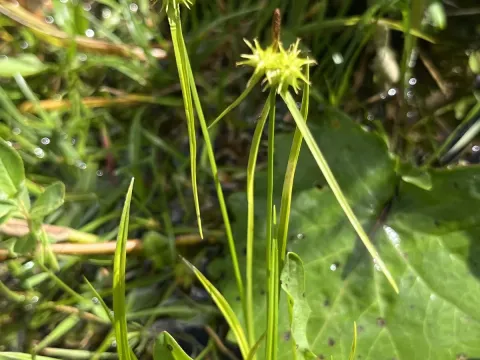
Yellow sedge
Carex flava
Yellow sedge (Latin: Carex flava) is a perennial herbaceous plant belonging to the Cyperaceae family. It is naturally occurring throughout Europe and North America, commonly found in meadows, marshes, and near water bodies.
What the section contains
Yellow sedge
The plant features tufted growth habits with vibrant, yellowish-green leaves and characteristic bottle-shaped perigynia. It typically reaches a height of 20 to 50 centimeters, depending on the environmental fertility and moisture levels.
The species has very high requirements for soil moisture. It thrives in wet, peat-rich, and mineral-heavy soils that remain waterlogged for significant portions of the year, providing a stable habitat where other forage grasses fail.
In terms of climate, Yellow sedge is extremely hardy and resilient to cold temperatures. It prefers full sun exposure to maintain its characteristic color and ensure vigorous growth during the short northern growing season.
Commercially, it is often utilized for ecological restoration, particularly in projects focused on wetland stabilization, preventing erosion in riparian zones, and supporting local biodiversity in aquatic landscapes.
Like many sedges, Carex flava can be susceptible to rust fungi, which manifests as brown or orange powdery spots on the foliage. Proper spacing is essential to ensure air circulation and reduce the humidity around the base of the plant.
Pest issues often involve leaf-mining insects that tunnel through the blades, reducing the plant's photosynthetic efficiency. Aphid infestations during the spring can also impact the quality of the developing inflorescences.
Managing the plant density and ensuring the soil is not overly saturated with stagnant water can significantly reduce the risk of pathogen outbreaks throughout the growing season.
If chemical intervention is necessary, professional growers should select fungicides and insecticides that are explicitly labeled for use on wetlands or non-food agricultural areas to avoid environmental damage.
Maintaining a balanced ecosystem around the sedge bed encourages beneficial predatory insects, which can act as a natural form of pest control, minimizing the need for manual or chemical interventions.