
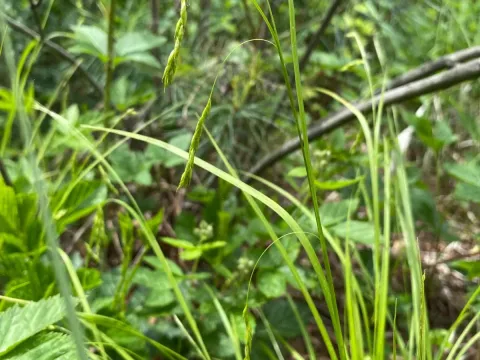
White edge sedge
Carex debilis
Carex debilis, commonly known as white edge sedge, belongs to the Cyperaceae family. It is a perennial plant native to forested regions, which defines its preference for specific shaded or partially shaded habitats in landscape and agricultural settings.
What the section contains
White edge sedge
The plant thrives in moist, acidic to neutral soils rich in organic matter. Proper drainage is essential, as the species does not tolerate waterlogged conditions for extended periods, despite its need for consistent soil moisture throughout the growing season.
Regarding climate, Carex debilis is well-adapted to temperate zones. It is known for its hardiness, but it performs best when protected from extreme, drying summer winds and intense direct sunlight, which can stress the foliage.
Agricultural management for this species is relatively low-intensity. It requires minimal intervention once established, but providing a layer of organic mulch helps retain moisture and suppress competing weed growth around the base of the plant.
Propagation is typically achieved through division of established clumps in early spring or autumn. Ensuring adequate spacing during planting is crucial to allow for the natural spread of the plant and to maintain good air circulation.
Carex debilis is generally resistant to most pests and diseases. The primary threats to its health are physiological rather than biological, often stemming from improper soil moisture levels or poor site selection that leads to stress.
Fungal leaf spots may occasionally occur if the plant is grown in high-humidity environments with poor airflow. Maintaining proper plant density and removing old, dead foliage during the spring cleanup cycle significantly reduces these risks.
Pests such as aphids or spider mites may occasionally infest the plants if they are already under stress from drought or nutrient deficiency. Monitoring the plants during the peak growing season is recommended to detect early infestations.
In landscape applications, slugs and snails can sometimes pose a problem for new, tender growth. Implementing simple barrier methods or natural biological controls is usually sufficient to manage these pests without resorting to chemical interventions.
Overall, the resilience of Carex debilis makes it a low-maintenance choice for many planting schemes. By providing appropriate site conditions and basic seasonal care, the threat of diseases and pests remains minimal.