
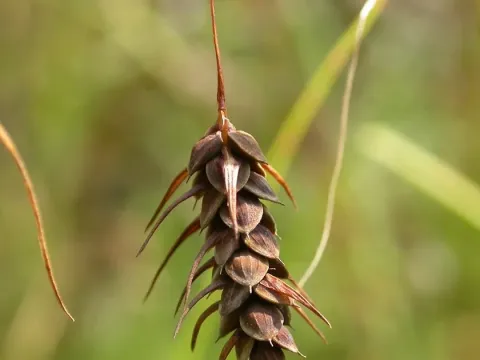
Yellow-green sedge
Carex viridula
Yellow-green sedge (Carex viridula) is a perennial herbaceous plant belonging to the Cyperaceae family. It is a highly adaptable species that plays a significant role in wetland ecosystems and riparian zones, forming dense populations in specialized environments.
What the section contains
Yellow-green sedge
The native range of this plant covers temperate regions of the Northern Hemisphere, including parts of Europe, Asia, and North America. It is typically found in wetlands, damp meadows, marshes, and along the edges of ponds or lakes where soil moisture remains consistently high throughout the growing season.
Botanically, this species is characterized by its tufted growth habit and vibrant green foliage. The leaves are narrow and the inflorescences consist of small, greenish-yellow spikes. The root system is fibrous, which allows the plant to anchor effectively in unstable, water-saturated, and sometimes sandy soil types.
Regarding cultivation requirements, this sedge thrives in moist, organic-rich soils. It prefers neutral to slightly acidic pH levels. While it is quite tolerant of varying temperature conditions, it demands consistent soil moisture and is intolerant of prolonged drought, which can rapidly lead to tissue dehydration and plant mortality.
In terms of agricultural and ecological utility, yellow-green sedge is often managed as part of wild-harvested forage or permanent pasture in wet areas. Its ability to create a tough sod makes it an excellent candidate for erosion control in drainage canals, riverbanks, and areas prone to periodic flood events.
Common diseases affecting this species include leaf rust and various fungal smuts that thrive in high-humidity microclimates. These infections can reduce the biomass productivity and the overall nutritional value of the plant when used as forage.
Pests that target this plant primarily include stem-boring insects and root-feeding larvae. Furthermore, intense competition from invasive reeds or non-native hydrophytes can suppress its growth, making proper pasture management and control of encroachment essential for maintaining healthy stands.