
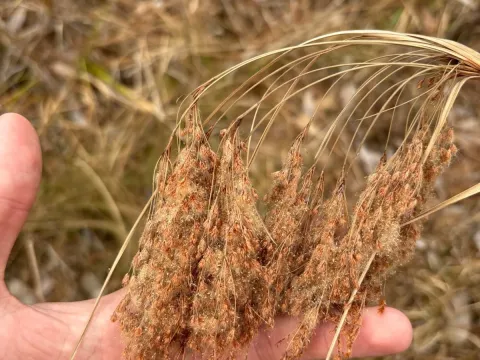
Woolgrass
Scirpus cyperinus
Scirpus cyperinus, commonly known as woolgrass, belongs to the Cyperaceae family. It is a perennial herbaceous plant native to North America, typically thriving in wetlands, marshes, and along the edges of ponds and streams.
What the section contains
Woolgrass
This species is highly adaptable, preferring full sun exposure and consistently moist to saturated soil conditions. Its ability to tolerate varying water depths makes it an ideal candidate for projects focused on wetland restoration and water management.
The plant features a robust rhizomatous root system, which is highly effective in soil stabilization. This characteristic provides significant value in preventing erosion in agricultural landscapes and maintaining the integrity of drainage areas.
Woolgrass is well-suited for temperate climates, demonstrating excellent cold hardiness. It grows best in acidic to neutral soils with high organic content, often thriving where other traditional crops might struggle due to excessive moisture.
In modern agricultural practices, this plant is increasingly recognized for its role in phytoremediation. It acts as an effective natural filter, removing excess nutrients and pollutants from runoff before they reach water bodies.
Woolgrass is remarkably resilient and generally resistant to severe agricultural pests. Because it occupies specific wetland niches, it is not prone to the typical diseases that affect upland staple crops, reducing the need for chemical intervention.
Some insects, particularly lepidopteran larvae, may feed on the foliage. However, such damage is typically cosmetic and rarely impacts the overall survival or biomass productivity of a well-established stand.
The main threat to new plantings is competition from invasive weeds or more aggressive woody species that can outcompete the woolgrass for light and nutrients during the establishment phase.
In dense stands with poor air circulation, occasional fungal issues can occur if the foliage remains overly damp. Maintaining appropriate planting density helps mitigate the risk of pathogen buildup in these microclimates.
To keep the crop healthy and productive, standard management includes periodic maintenance such as removing dead, accumulated biomass in late winter or early spring to facilitate vigorous new seasonal growth.