
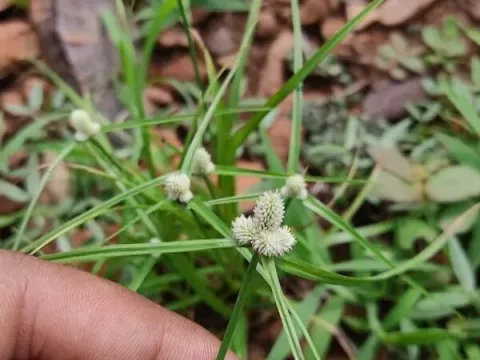
Cyperus tenuifolius
Cyperus tenuifolius
Cyperus tenuifolius, a member of the Cyperaceae family, requires specific sowing protocols tailored to its hydrophilic nature. Planting of seeds or rhizome fragments is ideally conducted in the spring, once soil temperatures consistently reach 15–18 degrees Celsius.
What the section contains
Cyperus tenuifolius
The optimal sowing time should avoid the risk of late frosts. As this species is water-demanding, ensuring constant soil moisture during the germination phase is critical for achieving high success rates in establishment.
When cultivating in high-moisture environments, planting density must be carefully managed to prevent excessive competition. A spacing of 20–30 cm between rows is recommended to support robust development of the above-ground biomass.
In greenhouse settings, sowing can begin earlier, allowing for more precise control over the environment. Seeds should be sown at a shallow depth to ensure sufficient light penetration, which is a key requirement for triggering successful germination.
Pre-sowing stratification is often beneficial for older seed lots to enhance energy and uniformity of sprouting. Following these agronomic practices ensures better survival rates and vigorous plant growth across various climates.
This crop is a classic hydrophyte, preferring areas with high water tables, such as floodplains and riparian zones. It thrives in loamy or clay-based substrates that are rich in organic matter and have high water-retention capacity.
Cyperus tenuifolius requires sufficient light exposure to maximize biomass production. Excessive shading can lead to thin, elongated stalks and a reduction in the overall nutritional quality of the plant tissue.
The species exhibits tolerance to slightly acidic and neutral soil pH levels. While it is adapted to temporary flooding, good soil aeration is still important for root health, making it an excellent candidate for rehabilitating wetland areas.
Climate plasticity allows the plant to adapt to various temperature ranges, though it performs best in moderately warm environments. It enters a dormant state during winter months in northern latitudes to protect its rhizomes from cold damage.
For high-yield production, periodic application of balanced mineral fertilizers, particularly nitrogen, is recommended. Proper nutrient management significantly boosts vegetative growth, which is essential for maximizing the crop's utility as forage.
The yield of Cyperus tenuifolius is primarily determined by moisture availability and soil nutrient content. With intensive management, the plant can produce significant quantities of green biomass suitable for silage or supplemental animal feed.
Yield metrics are highly dependent on harvesting frequency, as the plant possesses a strong regenerative capacity. Multiple cuts within a single growing season are possible and serve to increase the total annual productivity of the plantation.
Crop quality is time-sensitive, as the fiber content increases significantly with plant maturity. To maintain high nutritional value, harvesting should be performed during the active vegetative growth phase before the plants become overly lignified.
Economic efficiency is improved by utilizing land that is typically unsuitable for conventional grain agriculture. This allows for the productive use of waterlogged fields that would otherwise remain fallow.
Successful yield outcomes are supported by early-stage weed control and consistent monitoring. By maintaining a clean growing environment, growers ensure that resources are directed exclusively toward the development of the Cyperus crop.
Despite its resilience, Cyperus tenuifolius can be susceptible to fungal pathogens when drainage is poor or air circulation is restricted. Root rot is the most common disease, often exacerbated by stagnant water conditions.
The foliage may also attract various insect pests, particularly aphids and beetles that thrive in warm, humid climates. These infestations can diminish the quality of the harvested biomass if not managed promptly.
Disease management relies heavily on crop rotation and preventative cultural practices. Biological control methods are generally preferred to maintain ecological balance and ensure the safety of the harvested material.
The peak growing phase is the most critical time for crop protection. Systematic scouting of the fields enables early detection of pest or disease outbreaks, allowing for targeted and effective mitigation efforts.
Using high-quality, certified planting material is essential for preventing the introduction of pathogens. Strict adherence to sanitation standards during the setup of a plantation significantly reduces the overall risk of disease transmission.
Harvesting Cyperus tenuifolius is typically performed using mechanical mowers adjusted for high-moisture operations. Rapid drying or immediate processing of the cut material is crucial to prevent rapid fermentation or rotting.
The ideal time for harvest is at the onset of flowering, when the plants contain the highest concentration of essential nutrients and bioactive compounds. Harvesting at this stage ensures optimal feed quality.
Following harvest, the biomass must be promptly removed from the field for processing. For long-term storage, silage techniques under anaerobic conditions are the most effective method for preserving the crop's nutritional profile.
Quality control during harvest involves verifying that no toxic or undesirable plant species are mixed into the cut mass. Maintaining a pure crop is vital for ensuring the safety and quality of the final product.
Post-harvest residues can be effectively repurposed as organic mulch or incorporated into the soil to build organic matter. This practice supports soil health and contributes to the sustainability of the overall cropping system.