
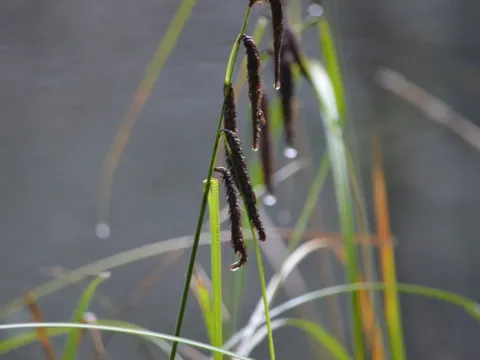
Kobresia
Kobresia
Kobresia is a genus of perennial herbaceous plants belonging to the Cyperaceae family. In natural ecosystems, it reproduces primarily through seeds that mature in late summer. When used in agricultural restoration, sowing is recommended in early spring when moisture levels are sufficient for germination.
What the section contains


Kobresia
Due to a long dormancy period, the seeds require stratification to ensure successful germination. In agricultural practice on high-altitude terrains, overseeding into existing turf is preferred to minimize soil disturbance and maintain the stability of fragile mountain soils.
Sowing depth must be minimal, as the small seeds require access to light. Following the sowing process, light rolling is beneficial to ensure proper soil-to-seed contact, which is essential for survival in windy alpine conditions.
Seedlings develop slowly, requiring protection from weed competition during the first growing season. Once established, the root system becomes deep and dense, making the plant highly competitive and resilient to environmental stressors.
The seeding rate varies depending on the specific objectives of pasture management, typically aiming to achieve a density that promotes rapid stabilization of the soil surface.
Kobresia is perfectly adapted to the harsh conditions of alpine and subalpine zones. It exhibits high tolerance to low temperatures, drastic diurnal shifts, and periods of seasonal drought, which are common at high elevations.
The plant thrives in well-drained, stony soils. It is highly sensitive to waterlogging and therefore favors slopes with natural drainage. The physical structure of the soil is more important than its fertility for this species.
While the plant can grow in nutrient-poor soils, phosphorus and potassium fertilization can significantly enhance biomass production. It has evolved to survive in skeletal soils that would not support traditional agricultural crops.
Kobresia is a heliophilous species that requires full sun exposure. The long daylight hours characteristic of high-altitude regions stimulate its metabolic activity and support the accumulation of essential nutrients in the leaves.
A consistent snow cover during winter acts as a critical insulating layer for Kobresia. It protects the tillering nodes from extreme frost, ensuring the plant can initiate rapid growth as soon as the snow melts.
The economic value of Kobresia lies in its role as a high-quality forage source for livestock, particularly yaks, sheep, and goats, in high-mountain regions. It forms a durable turf that maintains its nutritional profile better than many other grasses.
Biomass yield varies depending on the elevation and local precipitation, generally ranging from 5 to 15 decitonnes per hectare. While the output is lower than lowland forage, its nutritional quality makes it indispensable for alpine animal husbandry.
Kobresia is highly palatable to livestock, maintaining good protein levels even after the flowering stage. Its resilience to grazing allows for sustainable use if stocking rates are managed properly over long periods.
Proper pasture management involves rotational grazing to prevent overgrazing. This approach ensures the longevity of the stand, which, under ideal conditions, can remain productive for up to two decades.
- Provides vital early spring forage for mountain livestock.
- Extremely resistant to trampling and grazing stress.
- Critical for soil erosion control on steep mountain slopes.
- Maintains nutritional value well into late autumn and winter.
Kobresia possesses a strong natural immunity to most common agricultural plant diseases. Its adaptation to extreme environments, where pathogen pressure is low, provides an inherent defense against mass infections.
In cases of exceptionally humid conditions, minor fungal issues such as rust or powdery mildew may occur, but these are rarely economically significant and typically do not require chemical intervention.
Rodents, such as pikas and voles, represent the primary threat to Kobresia stands. Their burrowing activity can destroy the root systems and cause physical damage to the turf, leading to localized die-offs.
Anthropogenic pressure, particularly uncontrolled overgrazing, is the leading cause of stand degradation. Once the root mat is broken, the soil becomes susceptible to erosion, and the recovery process is extremely slow.
Effective management requires monitoring rodent populations and adhering to strict grazing rotation cycles to ensure the long-term health and productivity of the pastureland.