
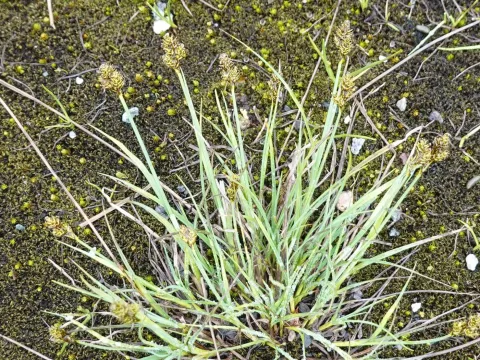
Lachenal's sedge
Carex lachenalii
Lachenal's sedge (Carex lachenalii) is a perennial herbaceous plant belonging to the Cyperaceae family. It is widely recognized as a circumpolar species, thriving in some of the most challenging environments on Earth, including high Arctic and alpine zones.
What the section contains
Lachenal's sedge
The distribution of this species covers vast areas in the Northern Hemisphere, spanning from Scandinavia and Russia to Canada and Greenland. It is typically found in wet meadows, tundra mires, and along the rocky banks of mountain streams and glaciers.
Botanically, it is identified by its loose, tufted growth habit and slender stems that typically reach heights between 10 and 30 centimeters. Its inflorescence is usually composed of several sessile spikes, providing a compact appearance that protects the reproductive organs from harsh winds.
The species requires acidic, consistently moist substrates to prosper. It demonstrates high tolerance to cold climates and waterlogged conditions, making it a pioneer species in post-glacial environments where other vegetation struggles to establish itself.
Regarding its utility, Carex lachenalii serves primarily as an essential forage component for Arctic wildlife. While not a commercial forage crop, its role in erosion control and soil stabilization in sensitive permafrost zones is invaluable for ecosystem integrity.
The primary environmental threats to Lachenal's sedge involve habitat loss resulting from rapid climate change. As permafrost thaws and local hydrology shifts, the specialized wet habitats that this plant relies on may disappear permanently.
Pathogenic threats are relatively low due to the frigid temperatures of its native range. However, localized infections by fungal pathogens or rusts can occur in years with unusually high humidity and summer temperatures, potentially reducing photosynthetic capacity.
Pest activity is generally limited to specialized tundra insects that feed on the soft tissues of the stems or developing seeds. These pests rarely cause widespread damage but can impact the overall reproductive success of a population in localized areas.
Overgrazing by reindeer and other herbivores poses a significant challenge. Because the growing season in the Arctic is extremely short, the plant lacks the physiological plasticity to recover rapidly after significant biomass removal.
Conservation efforts for this species focus on monitoring the stability of tundra water tables. Protecting these pristine areas from human-induced degradation is vital to ensuring that Carex lachenalii continues to fulfill its ecological function in the northern regions.