
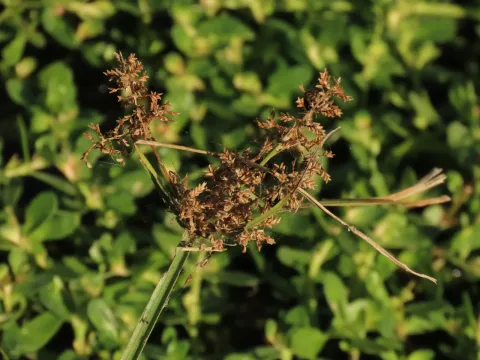
Kyllinga
Kyllinga
Kyllinga is a warm-season perennial that requires stable, warm temperatures for germination and early growth. Sowing is typically initiated in the spring once the threat of frost has passed and the soil has reached a consistent temperature of at least 20 degrees Celsius.
What the section contains
 Bulbous kyllinga
Kyllinga bulbosa
Bulbous kyllinga
Kyllinga bulbosa
 Golden kyllinga
Kyllinga aurata
Golden kyllinga
Kyllinga aurata
 Green kyllinga
Kyllinga brevifolia
Green kyllinga
Kyllinga brevifolia
 Kyllinga alba
Kyllinga blepharinata
Kyllinga blepharinata
Kyllinga coronata
Kyllinga coronata
Kyllinga alba
Kyllinga alba
Kyllinga blepharinata
Kyllinga blepharinata
Kyllinga coronata
Kyllinga coronata
 Kyllinga crassipes
Kyllinga debilis
Kyllinga debilis
Kyllinga exigua
Kyllinga exigua
Kyllinga crassipes
Kyllinga crassipes
Kyllinga debilis
Kyllinga debilis
Kyllinga exigua
Kyllinga exigua
 Kyllinga gracillima
Kyllinga nervosa
Kyllinga nervosa
Kyllinga gracillima
Kyllinga gracillima
Kyllinga nervosa
Kyllinga nervosa
 Kyllinga odorata
Kyllinga odorata
Kyllinga odorata
 Kyllinga squamulata
Kyllinga welwitchii
Kyllinga welwitchii
Kyllinga squamulata
Kyllinga squamulata
Kyllinga welwitchii
Kyllinga welwitchii
Kyllinga
Propagation is efficiently achieved through both seed dispersal and the expansion of underground rhizomes. When planting, it is crucial to ensure shallow soil coverage for seeds, as they are small and prone to dehydration if buried too deeply or allowed to dry out at the surface.
For vegetative propagation, rhizome segments should be planted at intervals of 15 to 20 centimeters. This method ensures quick establishment and dense ground cover, which is highly effective for erosion control or pasture stabilization in suitable climates.
Soil preparation is essential for successful establishment; the site should be tilled to a depth of 10–15 centimeters to allow for easy root penetration and rhizome spread. Regular irrigation immediately following sowing is necessary to bridge the gap until roots establish.
In managed agricultural systems, spacing is critical to control the aggressive spread of the plant. Field layout should prevent potential contamination of adjacent crops, as Kyllinga can become invasive if left unchecked in optimal environmental conditions.
Belonging to the Cyperaceae (sedge) family, Kyllinga thrives in moist, high-light environments. It exhibits a high degree of ecological flexibility, performing well in a variety of soil types including sandy, loamy, and even silty soils found in low-lying areas.
Water availability is the primary driver of growth for this plant. While it can survive short-term drought, its peak productivity is achieved in constantly moist conditions, such as floodplains or fields managed with regular irrigation.
Optimal soil pH levels for this crop range from neutral to slightly acidic. The plant responds well to balanced nutrient availability, although excess nitrogen can lead to rapid, leggy growth that may be less desirable for stable soil coverage or forage quality.
Full solar exposure is required for the plant to maintain its structural integrity and reproductive capacity. Shaded conditions lead to significant thinning of the stand and increased vulnerability to disease, making site selection crucial for commercial success.
Kyllinga prefers a tropical or subtropical climate, with optimum growth temperatures ranging between 25 and 30 degrees Celsius. It is highly sensitive to cold, and persistent freezing temperatures will typically lead to the die-back of all above-ground tissues.
The primary threats to Kyllinga are fungal pathogens such as rust and various leaf spot diseases, which typically emerge under conditions of high humidity, poor air circulation, and overcrowded planting densities.
Soil-dwelling pests, including nematodes and certain larval insects, can damage the underground rhizomes, leading to patches of stunted growth. Monitoring the root health periodically during the peak growing season is vital for maintaining productivity.
Effective management includes maintaining appropriate planting densities and ensuring good drainage. Reducing humidity levels around the foliage is a key preventive strategy to minimize the risk of fungal infections and rot.
Integrated pest management (IPM) practices should be followed to control infestations. This includes the use of biological control agents where possible, and selective application of fungicides if disease pressure threatens the viability of the stand.
As an aggressive grower, Kyllinga itself can become a threat to other crops in a polyculture system. Its efficient spread via rhizomes necessitates strict physical barriers or regular mechanical management to keep the crop confined to its intended area.