
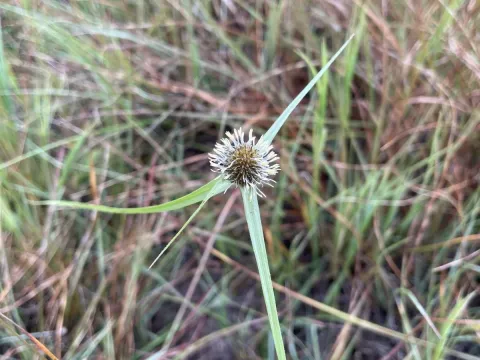
Kyllinga erecta
Kyllinga erecta
Kyllinga erecta is a perennial herbaceous plant belonging to the Cyperaceae family. It is a distinctive member of the sedge group, widely recognized for its robust rhizome system and specific ecological adaptation to moist environments.
What the section contains
Kyllinga erecta
The origin of this species is primarily linked to the tropical and subtropical regions of Africa. From there, it has demonstrated a significant capacity to colonize diverse geographic areas, particularly those characterized by consistent moisture levels and warm climates.
Regarding habitat requirements, the plant thrives in soils that are saturated or periodically inundated. It is frequently observed in riparian zones, wetlands, and irrigated agricultural lands where water management practices allow for its establishment.
Botanical features of Kyllinga erecta include slender, erect stems and characteristic capitate inflorescences. The structure of its rhizomes allows the plant to form dense mats, providing excellent soil stabilization in its natural habitat.
In terms of agricultural significance, this species is often classified as a weed in rice paddies. However, its biological resilience and ability to grow in challenging conditions provide potential for its use in wetland restoration or soil erosion control programs.
The growth and spread of Kyllinga erecta are primarily limited by intensive mechanical cultivation, which disrupts the integrity of its extensive underground rhizome network.
The plant demonstrates a strong natural immunity to many common crop pathogens, making the study of its specific diseases a specialized area of interest in weed biology.
Insect pests such as stem-borers or root-feeding nematodes may occasionally affect the plant, but they rarely threaten the overall population stability of the species.
Environmental competition with faster-growing aquatic plants can suppress the colonization of Kyllinga erecta in habitats where nutrient resources are heavily contested.
Chemical control involving systemic herbicides is often the most effective method for managing its presence in areas where it interferes with high-value agricultural production.