
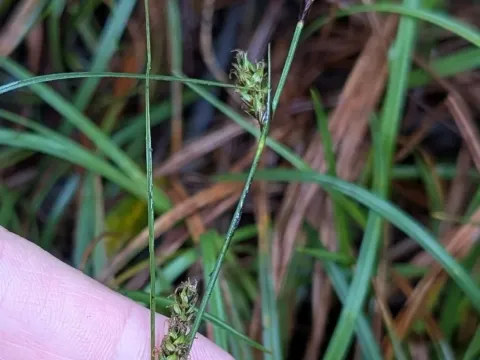
Green-ribbed sedge
Carex binervis
Green-ribbed sedge (Carex binervis) is a perennial herbaceous plant belonging to the Cyperaceae family. It is native to Western and Central Europe, typically found in acidic and moist habitats, ranging from moorlands to heathlands.
What the section contains
Green-ribbed sedge
The plant exhibits high ecological plasticity, allowing it to thrive in nutrient-poor, acidic soils where other agricultural crops fail. It prefers consistently moist but well-drained conditions, showing resistance to temporary waterlogging.
Botanically, Carex binervis is characterized by stiff, upright stems that can reach 60 to 80 centimeters in height. Its leaves are distinctively tough, featuring prominent venation, which contributes to its physical durability.
Climate requirements include high atmospheric humidity and relatively cool temperatures. The plant is well-adapted to oceanic climates, where rainfall is frequent and extreme temperature fluctuations are absent.
In terms of agricultural suitability, the plant's robust root system makes it an excellent choice for stabilizing soils on sloped or erosion-prone lands. Its ability to tolerate low-fertility conditions makes it a reliable component of sustainable grassland management.
The agricultural value of green-ribbed sedge lies primarily in its utility as a reliable forage source in marginal pasture areas. It provides a consistent cover of green biomass throughout the spring and early summer seasons.
Forage yield is largely dependent on the density of the stand and the local moisture regime. While it is not a high-intensity crop, its consistent production on poor soils provides essential fodder for livestock in extensive farming systems.
Harvesting for hay should occur before the plant reaches full maturity. As the sedge ages, the lignin content in the leaves and stems increases significantly, which reduces its overall digestibility for cattle and sheep.
In agricultural practice, this sedge is often considered an essential part of natural meadow ecosystems. It helps maintain ground cover during periods of low growth for other forage grasses.
When managed as part of a mixed-species pasture, it provides a stable foundation for animal grazing. Its recovery rate following mowing or grazing is steady, provided that the soil nutrient balance is not severely depleted.
Carex binervis is naturally resistant to most common plant diseases. Infections, such as rust fungi, are observed only in specific cases of prolonged high humidity and poor air circulation in the meadow stand.
Pest pressure on this species is generally low. While some insect larvae may feed on the plant's tissues, their impact is typically negligible and rarely requires any form of intervention or chemical pest control.
The primary threat to the longevity and productivity of a sedge-dominated stand is overgrazing. Excessive pressure from livestock can lead to the thinning of the root system and the intrusion of opportunistic weed species.
To preserve the health of the crop, it is recommended to implement rotational grazing patterns. This prevents the exhaustion of the plant and allows for the necessary rejuvenation of the vegetative cover.
Integrated management approaches focus on maintaining optimal soil moisture and preventing soil compaction. By following these basic practices, farmers can sustain long-term growth and productivity without the need for intensive chemical applications.