
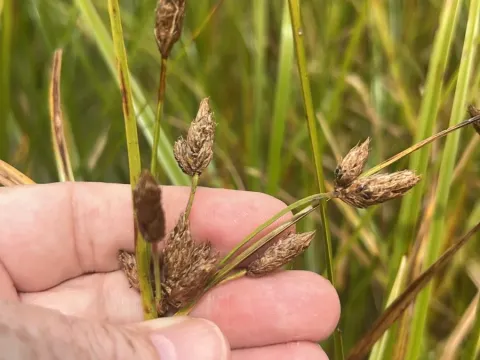
Green bulrush
Scirpus perviridis
Green bulrush (Scirpus perviridis) belongs to the Cyperaceae family. In agricultural practices, it is primarily propagated through vegetative division of rhizomes, which ensures rapid establishment in wet environments.
What the section contains
Green bulrush
The optimal time for planting is during the spring season when soil temperatures begin to rise. This timing promotes root development before the onset of the active growth period, ensuring the plants thrive.
Seed propagation is possible but requires a cold stratification period and specialized moist substrates. Germination is relatively slow, necessitating strict moisture control to avoid drying out the seeds.
For commercial phytoremediation projects, planting is usually performed in prepared trenches. Proper spacing is crucial to prevent excessive competition while maximizing the plant's filtering efficiency.
Selecting the appropriate site involves ensuring consistent access to water. The plant shows high adaptability to waterlogged conditions, making it suitable for flood-prone agricultural areas or wetland buffer zones.
Green bulrush is a hydrophyte, meaning it requires constant access to moisture. It performs best in wetland areas, near shorelines, or in shallow waters up to 20 centimeters deep.
The plant is not overly demanding regarding soil type, but it thrives in fertile, silty soils rich in organic matter. A neutral or slightly acidic pH is ideal for optimal nutrient uptake.
Full sun exposure is vital for this species. Bright light supports the accumulation of biomass and maintains the characteristic vibrant green color of the stems throughout the season.
The species is highly frost-hardy and well-adapted to temperate climates. During winter, the rhizomes remain dormant, allowing the plant to survive freezing temperatures and regenerate effectively in the spring.
In its natural habitat, the plant is found in river floodplains and marshy meadows. Successful cultivation requires simulating these environments by maintaining stable moisture levels.
The agricultural value of green bulrush lies in its high biomass production. In well-managed stands, the plant efficiently extracts pollutants, serving as a primary component in artificial biofilters.
By absorbing excess nitrogen and phosphorus from water, the plant provides significant ecological benefits. This makes it an economically viable choice for treating agricultural runoff and wastewater.
In landscaping, yield is defined by the plant's ability to create dense, aesthetic coverage. It is widely used for shoreline stabilization, which prevents soil erosion and protects water clarity.
Harvested biomass can be processed into compost or used as mulch, providing a sustainable way to recycle plant nutrients back into the farm ecosystem after initial processing.
Maximum productivity occurs during the summer months when photosynthetic activity is at its peak. Regular maintenance and proper stand management ensure high yields over long periods.
Green bulrush is remarkably resistant to many common agricultural pests and diseases. However, fungal infections can occur in stagnant, poorly ventilated areas where water circulation is insufficient.
Pests such as aphids or certain aquatic beetles may occasionally target young shoots during the early stages of growth. Regular field monitoring is recommended to keep pest populations in check.
Damage to rhizomes by rodents is a potential threat in some regions. Additionally, aquatic mollusks may feed on young plant tissues if their population density becomes too high.
Excessive contamination or anaerobic conditions in the soil can suppress the plant's physiological development. Maintaining proper water flow helps prevent the buildup of pathogens in the root zone.
While mature stands of green bulrush are highly competitive and effectively suppress weeds, controlling competing vegetation is essential during the initial establishment phase of a new plantation.
Harvesting is typically conducted at the end of the growing season. This allows the plant to transfer nutrients to its rhizomes, ensuring the vitality and longevity of the stand for the next year.
Mechanical harvesting requires specialized equipment, such as amphibious harvesters or low-pressure mowers, to navigate wet environments without damaging the substrate or the rhizome network.
For ornamental or shoreline management purposes, selective harvesting is preferred. Removing only old or damaged stems helps rejuvenate the stand and improves the visual appeal of the site.
When used as a biofilter, harvesting is necessary to remove trapped pollutants from the ecosystem. This prevents the release of nutrients back into the water as the plant matter decomposes.
The harvested stems are durable when dried, making them useful for secondary applications like insulation or the creation of rustic crafts, adding to the crop's overall economic value.