
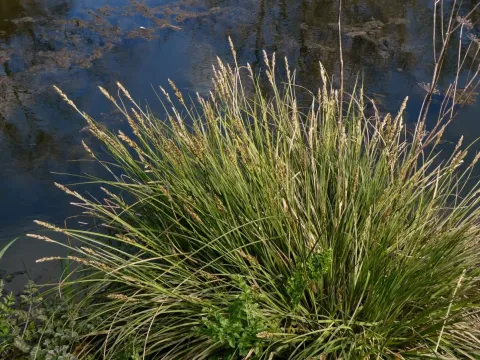
Greater tussock-sedge
Carex paniculata
Sowing Carex paniculata is best performed in early spring or autumn to allow seeds to benefit from natural temperature fluctuations for germination.
What the section contains
Greater tussock-sedge
The seeds require a moist, peat-rich medium and should be sown on the surface, as they need light to trigger the germination process effectively.
Propagation can also be achieved by dividing established, dense tussocks, which is the most reliable method for nursery-scale multiplication.
When sowing, ensure the soil surface remains constantly damp, as seeds are highly sensitive to drying out during the initial establishment phase.
Spacing for plantations should be adapted to the landscape goals, typically ranging from 50 to 80 centimeters between individual clumps for optimal growth.
Carex paniculata is a perennial plant belonging to the Cyperaceae family, widely known for its iconic large, dense, and elevated tussock growth habit.
It thrives in wetland environments, including fens, swamps, and riverbanks, where the soil is consistently saturated and rich in organic matter.
The plant requires full sun to partial shade; however, its structural integrity and tussock density are significantly higher in well-lit locations.
Soil pH levels should ideally be neutral or slightly acidic to promote robust root development and efficient nutrient uptake in aquatic conditions.
Management of the water table is the most critical agronomic factor, as the species relies on consistent moisture levels to prevent physiological stress.
The biomass yield of Carex paniculata is primarily linked to the nutrient status of the wetland and the stability of the water supply throughout the season.
While not a traditional food crop, it serves as a valuable source of biomass for phytoremediation and the stabilisation of eroding shorelines.
Productivity peaks mid-summer, although the fibrous nature of the foliage makes it less suitable for animal fodder unless harvested at a very young stage.
In nursery production, yield is calculated based on the number of healthy plugs or divisions that can be harvested from a mature mother plantation.
The accumulation of dead biomass within the tussocks over years contributes to the carbon sequestration potential of these specialized wetland systems.
Carex paniculata is generally robust, but excessive humidity can lead to fungal leaf spots, which are usually minor unless the plant is already stressed.
Insects like aphids and certain larvae may target the foliage, but they rarely cause significant economic damage in well-maintained natural populations.
The most severe threat to this species is the alteration of wetland drainage, leading to soil desiccation and subsequent plant mortality.
Invasive weed species can outcompete young sedge plants, requiring manual weeding during the initial planting stages to ensure successful establishment.
Monitoring for signs of root rot is essential in stagnant water conditions where oxygen levels might drop below the requirement for healthy root systems.
Harvesting of the foliage for biomass purposes is typically executed in late autumn after the active growing season has concluded to minimize disturbance.
For ornamental maintenance, a hard prune of the tussocks should be conducted in early spring, removing dead leaves to encourage fresh green regrowth.
When harvesting, use heavy-duty mowing equipment, as the coarse, fibrous stems of the sedge can be challenging for standard agricultural cutters.
Properly dried, the harvested sedge material can be repurposed as high-fiber organic mulch or utilized in small-scale biomass energy experiments.
Always ensure that harvesting practices comply with environmental guidelines to protect the integrity of the wetland habitats where the plants originate.