
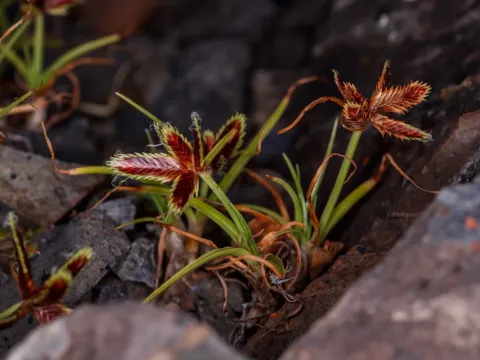
Cyperus teneriffae
Cyperus teneriffae
Cyperus teneriffae is a resilient member of the Cyperaceae family, recognized for its adaptability to challenging arid environments across its distribution range.
What the section contains
Cyperus teneriffae
The sowing process is typically initiated during the early spring when soil temperatures reach a stable threshold of 15-18 degrees Celsius, ensuring optimal germination.
Seeds are sown at a shallow depth of 1-2 centimeters, as the small size of the seeds necessitates careful soil preparation to ensure a firm and level seedbed.
Achieving uniform plant density is critical for long-term stand establishment, which is often managed by precision sowing machinery in professional agricultural settings.
Post-sowing moisture is essential during the first weeks of growth; therefore, a light irrigation cycle is recommended if natural precipitation is insufficient.
This species thrives in well-drained sandy or loamy soil textures, which prevent root asphyxiation and promote deep root system development in dry climates.
Cyperus teneriffae is notable for its exceptional drought tolerance, a biological feature that allows it to survive prolonged periods without significant rainfall.
Full solar exposure is mandatory for this plant, as it has a high light requirement for effective photosynthesis and vigorous vegetative growth.
The optimal pH range for soil quality is between 6.5 and 7.5, which balances nutrient availability and maximizes the plant's ability to uptake nitrogen and phosphorus.
Though adapted to arid conditions, the plant responds positively to moderate nutrient inputs, especially in nutrient-poor desert soils where organic matter is limited.
The biomass yield of Cyperus teneriffae is highly dependent on the availability of moisture, with yields increasing significantly under supplementary irrigation regimes.
The plant demonstrates a unique ability to form a dense, sod-like mat that is resilient to trampling, making it an effective choice for managed pastoral systems.
Depending on local climatic conditions, multiple harvests per season are achievable through careful management of cutting intervals and regrowth periods.
The nutritional profile of the harvested biomass is at its highest before the reproductive stage, necessitating timely harvesting to maximize feed quality for livestock.
Sustainable yield practices involve maintaining a balance between grazing intensity and plant recovery time to ensure the long-term viability of the stand.
Fungal diseases are the primary threats, especially in environments where humidity is high or water drainage is inadequate, leading to root rot and foliar infections.
Sucking insects, including aphids, represent a common pest group that can stunt plant growth during the critical early stages of development.
Weed competition is a significant concern during the establishment phase, as the plant exhibits relatively slow initial growth compared to aggressive invasive weeds.
Proactive monitoring for signs of stress, such as leaf discoloration or wilt, is recommended to apply corrective measures such as targeted fertilizer application or pest control.
An integrated approach to crop protection, focusing on preventive hygiene and balanced irrigation, remains the most effective strategy against common diseases.
Harvesting for forage purposes is best scheduled just before the inflorescences emerge, as this ensures the biomass contains the optimal concentration of proteins and minerals.
Mechanical harvesting should be carried out at a cutting height of approximately 5-7 centimeters above the soil surface to encourage rapid regrowth from the rhizomes.
After cutting, the biomass should be dried properly to a safe moisture content to prevent spoilage and the development of mycotoxins during storage.
In grazing scenarios, a rotational stocking system is advised to allow the plants to recover their energy reserves between periods of grazing pressure.
The processed material can be utilized effectively as green forage, hay, or formulated into pelletized feed, providing a reliable source of fiber for agricultural animals.