
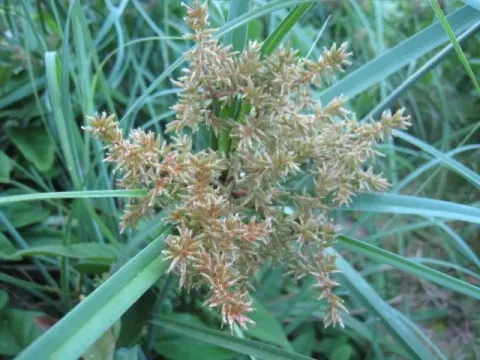
Cyperus pennatus
Cyperus pennatus
Cyperus pennatus, commonly known as a type of sedge, belongs to the Cyperaceae family. It is a perennial herbaceous plant that propagates via seeds or through vegetative rhizome expansion. In agricultural settings, planting is scheduled to coincide with the start of the warm season to maximize establishment.
What the section contains
Cyperus pennatus
For successful seed germination, high substrate humidity and stable temperatures are essential. Sowing is best performed in well-prepared, nutrient-rich soil that remains constantly saturated. The seeds are light-sensitive, meaning they should not be buried deeply to ensure proper light absorption.
Vegetative propagation via rhizome division is frequently preferred for large-scale production. This method significantly shortens the time required to establish a dense, harvestable crop. Planting segments in pre-moistened areas allows for rapid adaptation and root system development.
Post-sowing management requires strict water level control, as the plant is a true hydrophyte. Even brief periods of drought can cause severe physiological stress and growth retardation. Constant monitoring of water levels in the planting zone is mandatory for success.
Establishing specialized nurseries is a common practice for commercial growers. This ensures that only vigorous, healthy seedlings are transplanted to the production sites, which promotes uniform growth and higher yields across the entire plantation.
The plant has specific environmental needs, thriving best in wetlands, riverbanks, and marshy terrain. It shows remarkable tolerance to brackish water, making it a valuable candidate for land reclamation in coastal environments that are unsuitable for other crops.
Soil quality should ideally consist of silt or peat-rich compositions that provide adequate nutrient support. Good aeration in the water medium is crucial to prevent root rot, as the plant prefers water that exhibits at least minor movement or circulation.
As a tropical and subtropical species, Cyperus pennatus is highly sensitive to frost. In temperate regions, cultivation must take place within controlled environments like greenhouses or heated aquatic systems to prevent thermal damage during the dormant period.
Light exposure is a critical limiting factor for biomass accumulation. The species requires full sun exposure to reach its maximum vegetative potential. Shaded conditions lead to weak stems, reduced density, and poor overall quality of the harvestable material.
In addition to agricultural purposes, the plant is highly effective in phytoremediation. Its root system efficiently absorbs heavy metals and excess nutrients from water, making it an excellent choice for constructed wetlands aimed at cleaning agricultural wastewater.
The yield of Cyperus pennatus is primarily measured by the total above-ground biomass, which is utilized for weaving, construction, and mulching. With proper management, the species forms dense stands that allow for high productivity per hectare.
Under optimal conditions, multiple harvests are possible within a single growing season. This high regenerative capacity makes the plant an economically viable crop, requiring less investment in re-seeding or intensive soil preparation over the years.
Nitrogen fertilization can significantly boost vegetative growth rates, leading to higher biomass yields. However, application must be calculated carefully to prevent environmental contamination and to ensure the nutrient load remains within the capacity of the plant's uptake.
The speed of regrowth after cutting is a key performance metric. By utilizing proper harvesting techniques, growers can maintain a sustainable production cycle, ensuring that the plant continuously generates high-quality stalks throughout its productive lifespan.
Regional climate variability plays a major role in total annual output. Areas with year-round warmth experience longer growing seasons, which result in cumulative biomass yields substantially higher than those achieved in regions with shorter warm cycles.
The primary threats to Cyperus pennatus involve fungal diseases, particularly root rots triggered by stagnant water and poor air circulation. Regular flushing of the planting beds is a standard management practice to reduce the pressure of pathogenic organisms.
Dense planting can inadvertently create environments conducive to pests and disease outbreaks. Maintaining optimal spacing between plants is essential to ensure adequate airflow, which acts as a natural deterrent to many fungal pathogens and insect pests.
Insect pests that target stems and foliage can reduce both the visual quality and the mechanical strength of the fibers. Integrated pest management, incorporating biological controls and minimal chemical use, is the preferred approach for maintaining crop health.
Weed competition is a significant challenge during the early stages of establishment. Invasive species can quickly outcompete young sedge plants, leading to major production losses if monitoring is not consistent during the first few months.
Nematodes may become a concern in fields used for monocultures over extended periods. Rotating crops or periodically allowing the soil to dry out can help break the lifecycle of soil-borne pests, preserving the long-term health of the plantation.
Harvesting strategies are dictated by the intended end-use of the stalks. When material is destined for high-quality weaving, the harvest occurs once the stalks reach full maturity, as this is when the fibers exhibit the best combination of strength and flexibility.
Both manual and mechanized harvesting methods are utilized, depending on the scale of the operation. The key to sustainable management is cutting the stalks at the correct height, which avoids harming the crown and rhizomes, thus ensuring rapid regrowth.
Post-harvest processing is essential for quality retention. Stalks are typically dried in shaded, well-ventilated areas to prevent brittleness caused by excessive sun exposure, which would compromise the durability of the final product.
Seed harvesting is carried out when the spikes are fully ripened. The seeds are collected, cleaned of debris, and stored in dry, cool, and dark conditions to maintain viability for future sowing seasons, usually remaining potent for up to two years.
Systematic harvesting not only yields commercial material but also invigorates the plant population. By removing older, mature stems, the grower stimulates the production of younger, more vigorous shoots, which sustains the productivity of the site for years.