
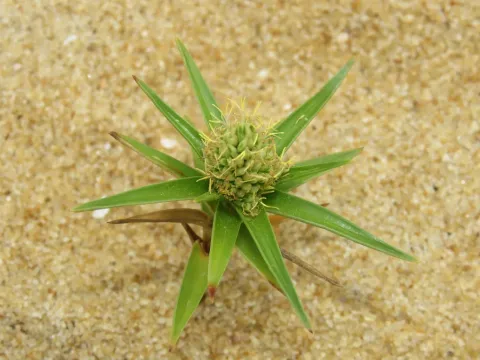
Cyperus pedunculatus
Cyperus pedunculatus
Cyperus pedunculatus is a perennial sedge belonging to the Cyperaceae family. It is widely recognized for its robust nature and adaptation to coastal environments, making it a critical species for ecological restoration and soil stabilization.
What the section contains
Cyperus pedunculatus
The plant features a complex rhizome system that allows it to spread rapidly across sandy terrains. This structural adaptation is the primary reason for its effectiveness in binding loose soil and preventing wind and water erosion in maritime areas.
Regarding climatic requirements, it thrives in tropical and subtropical zones where temperature fluctuations are minimal. It requires direct sunlight and cannot tolerate prolonged periods of cold or frost, which inhibits its growth significantly.
Soil quality for this species should ideally be sandy or sandy-loam with excellent permeability. While it is tolerant to salinity, it requires a certain level of mineral availability to maintain its vigorous growth rate and dense foliage.
Cultivation practices should focus on maintaining the stability of the substrate. Given its biological nature, excessive mechanical disturbance of the soil should be avoided to prevent damage to the delicate rhizome network that anchors the plant.
The main threats to this species include fungal infections that target the roots during periods of waterlogging. Proper drainage is essential to maintain the health of the rhizomes and prevent systemic decay.
Pests such as subterranean larvae can significantly damage the root system, leading to a loss of vigor and stunted growth of the above-ground parts of the sedge.
Leaf rust remains a common occurrence in humid, stagnant air environments, necessitating periodic inspection of the leaf blades for early signs of discoloration or spore development.
Biosecurity measures and the use of healthy, disease-free planting material are vital for ensuring the longevity of established stands of Cyperus pedunculatus.
Integrated management plans often include monitoring soil pH levels, as extreme fluctuations can weaken the plant's natural defense mechanisms against soil-borne pathogens.