
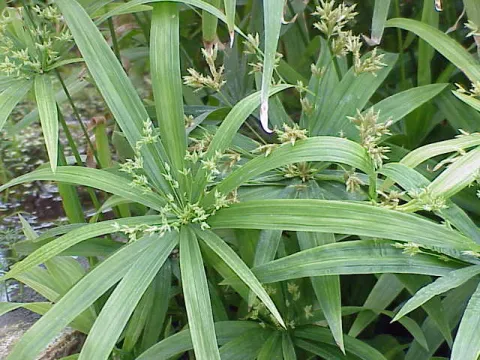
Cyperus procerus
Cyperus procerus
Cyperus procerus, a member of the Cyperaceae family, is a perennial herbaceous plant native to tropical and subtropical regions. It thrives in wetland environments and requires specific conditions for successful establishment.
What the section contains
Cyperus procerus
Propagation is typically carried out vegetatively by dividing existing rhizomes. In commercial cultivation, maintaining optimal planting density is essential to ensure robust development of the root system.
Planting schedules are determined by the onset of consistently warm weather, as the species is highly sensitive to cold temperatures. Selection of viable rhizome fragments is critical for healthy crop development.
Site selection focuses on areas with reliable water access. The plant is inherently adapted to waterlogged conditions, making proximity to water bodies or reliable irrigation systems necessary for high productivity.
Field preparation involves light cultivation and the incorporation of organic matter, which enhances soil fertility and facilitates quick root establishment during the initial phase of the growing season.
The plant has strict requirements for soil moisture. Ideal conditions include silty, humus-rich soils that retain moisture effectively, often found in river floodplains and marshy lowlands.
A tropical climate is required for optimal growth. Cyperus procerus does not tolerate frost, so ambient temperatures should ideally remain within the 20–30 degrees Celsius range throughout the cycle.
While the plant shows tolerance for partial shade, high levels of solar radiation significantly improve biomass accumulation and speed up the development of both stems and rhizomes.
Soil pH should ideally be neutral or slightly acidic. High salinity levels are detrimental to the plant and can severely stunt growth and reduce overall crop yields in affected areas.
Management practices revolve around maintaining high moisture levels. Its biological ability to withstand prolonged submergence makes it a unique crop suitable for areas unsuitable for traditional agriculture.
The economic value of Cyperus procerus is linked to its biomass production, which can be utilized in various industrial sectors. Yield is directly proportional to the quality of water management and nutrient availability.
During the growth cycle, the plant produces numerous stems and starch-rich rhizomes. Harvesting is conducted at the end of the vegetative phase to ensure the maximum concentration of valuable compounds.
Crop efficiency is measured by the total biomass generated per unit of area. Proper maintenance allows for multiple harvests provided that the integrity of the rhizome network is preserved during extraction.
Plantation productivity tends to fluctuate with age, so periodic rejuvenation of the site through re-planting is recommended to maintain vigorous growth rates over the long term.
Primary processing of the harvest includes cleaning and dehydration, which are essential steps to prepare the material for industrial use or further refinement in various supply chains.
Cyperus procerus is generally resilient, but high-humidity environments can lead to fungal infections. Root rot is a common issue if water stagnation occurs without proper circulation.
Insect pests that target succulent stems pose the primary biological threat. Additionally, various wetland-associated herbivores may cause localized damage if the population is not monitored.
Protective measures include utilizing disease-free planting material and adhering to strict crop rotation practices. Early removal of infected plants is crucial to prevent the spread of pathogens across the plantation.
Chemical intervention should be minimized, especially near open water sources. Instead, integrated pest management focused on mechanical and cultural controls is preferred for sustainable production.
Prevention relies on maintaining optimal stand density and ensuring adequate aeration. These factors prevent the formation of microclimates that are favorable for the development of fungal spores and pests.
Harvesting is performed using mechanical equipment or manual labor, depending on the scale. Care must be taken to minimize damage to the rhizome structure to support natural site recovery.
The technical process involves cutting the root system at a specific depth. Following extraction, the material must be cleaned of soil and debris to maintain high market quality.
Rapid transport to the processing facility is essential to preserve the biological quality of the harvest. Delays in post-harvest handling can lead to degradation of useful chemical components.
Once harvested, the material is sorted by fraction, and high-quality rhizome portions are often set aside for propagation during the next planting cycle.
The final stage is controlled drying, which reduces moisture content to levels that prevent microbial growth, ensuring the product can be stored effectively without loss of quality.