
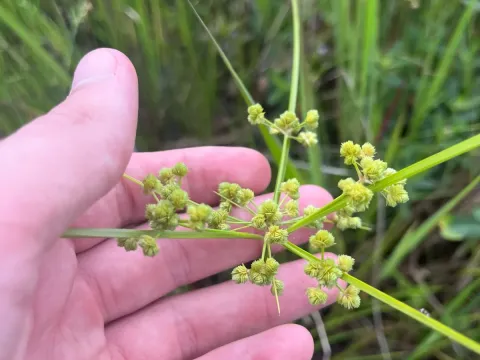
Cyperus pseudovegetus
Cyperus pseudovegetus
Cyperus pseudovegetus is a robust perennial member of the Cyperaceae family. It is recognized for its dense, umbrella-like clusters of spikelets, which are typical for the sedge family and provide the plant with its distinct aesthetic and ecological profile.
What the section contains
Cyperus pseudovegetus
The native distribution of this species is primarily centered in North America. It thrives in diverse wetland environments, including river margins, marshes, and periodically flooded meadows where water availability is consistent throughout the year.
Regarding soil and site requirements, this plant prefers high-moisture substrates such as silty clays or organic-rich muck soils. It is highly adapted to hydro-periods that involve saturation, meaning it requires water-logged conditions to reach its full vegetative potential.
Climatic adaptability of Cyperus pseudovegetus is quite broad within temperate and subtropical zones. It favors full sunlight exposure to maintain structural integrity and color, although it can endure partial shade in warmer climates.
Management and agronomy of the crop focus heavily on moisture control. If grown in controlled environments, the primary objective is to mimic its natural habitat conditions while managing nutrient runoff to promote vigorous shoot development.
The crop is susceptible to a variety of fungal pathogens that thrive in high-humidity environments. Leaf spot diseases, caused by various species of fungi, can weaken the plant and reduce its aesthetic and biological value significantly.
Insect pests include sucking insects such as aphids and spider mites, which congregate on the tender basal portions of the stems or along the leaf blades. These pests extract sap, causing stunted growth and increased vulnerability to secondary infections.
In addition to sap-sucking pests, some leaf-mining larvae can cause damage by tunneling within the foliage. This reduces the surface area available for photosynthesis, which is critical for a plant that relies on rapid biomass accumulation.
Effective management against these threats involves regular crop scouting and the removal of infected plant debris. Maintaining adequate spacing is essential to ensure airflow, which helps mitigate the development of fungal spores.
Integrated pest management strategies are recommended, especially when the species is cultivated in sensitive wetland areas. Preferring biological controls and preventative cultural practices ensures the long-term health of the sedge population.