
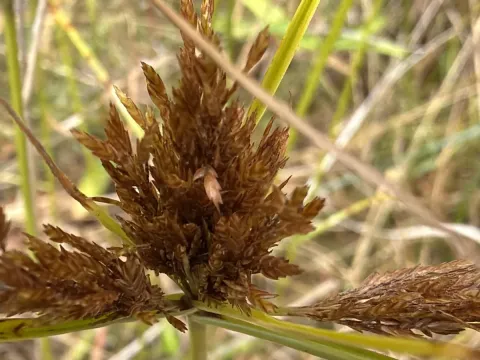
Cyperus polystachyos
Cyperus polystachyos
Cyperus polystachyos is a perennial herbaceous plant belonging to the Cyperaceae family. It is widely distributed across tropical and subtropical regions globally, typically thriving in marshy environments and wetlands where water saturation is consistent throughout the year.
What the section contains
Cyperus polystachyos
The plant exhibits remarkable adaptability to various soil types, ranging from sandy banks to heavy, nutrient-rich silt. Its primary requirement is a high water table, as it is physiologically structured to flourish in saturated soil conditions where other crops might fail.
Optimal growth occurs in environments with high light intensity and temperatures ranging between 25 and 35 degrees Celsius. It is not cold-tolerant and requires frost-free conditions to maintain its perennial growth habit throughout the growing season.
Botanically, it features a tufted growth form with slender stems and complex inflorescences. The root system is fibrous and extensive, acting as a natural soil binder, which makes the plant effective for preventing erosion in riparian zones or agricultural drainage channels.
In terms of agricultural management, maintaining the hydrologic regime is the most critical factor. Farmers must ensure that moisture levels do not drop significantly, as desiccation quickly reduces vigor and leads to rapid yellowing of the foliage.
This species is generally resilient but can be affected by sap-sucking insects like aphids, which often colonize the tender stems during periods of rapid growth. Managing insect populations is essential to maintain plant health and biomass yield.
Fungal pathogens such as rust and various leaf spot diseases are common, especially when humidity is excessively high and air circulation is poor. Proper spacing and site selection are the best preventative measures against these issues.
Weed management within a Cyperus polystachyos crop is often difficult because the species is itself capable of outcompeting other vegetation. Therefore, it is usually managed as a semi-wild crop rather than an intensive plantation.
The impact of vertebrate pests, such as small rodents, should not be ignored, as they can damage the root system. Integrated pest management strategies, focusing on biological controls, are recommended for sustainable agricultural practice.
Regular visual inspections of the stands are necessary to detect early signs of chlorosis or necrosis. Early identification of stress factors, whether biotic or abiotic, allows for timely intervention to preserve the total harvestable biomass.