
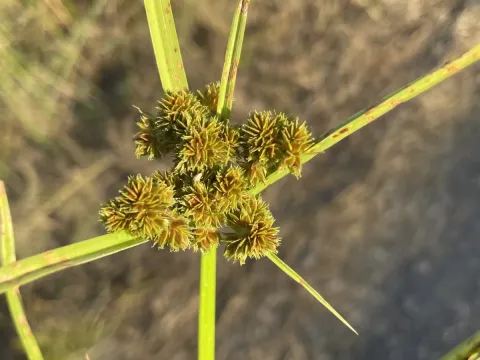
Cyperus pseudokyllingioides
Cyperus pseudokyllingioides
Cyperus pseudokyllingioides is a perennial herbaceous plant belonging to the Cyperaceae (sedge) family. This species is widely recognized for its ability to thrive in aquatic and semi-aquatic environments, making it a significant plant in various wetland ecosystems across its native tropical and subtropical ranges.
What the section contains
Cyperus pseudokyllingioides
Originating from regions with abundant rainfall, this plant is naturally adapted to high-moisture soils and areas susceptible to seasonal flooding. Its survival strategy relies on a dense rhizome system that anchors the plant firmly in saturated substrates, protecting it from being washed away during heavy rains.
The botanical structure of the plant features slender leaves and erect stems that culminate in dense, spike-like inflorescences. These specialized clusters are key identification markers, distinguishing this species from others within the diverse Cyperus genus while facilitating effective seed dispersal via aquatic currents.
Optimal growth conditions necessitate a warm climate with consistent access to moisture. Unlike many standard agricultural crops, this species prefers high humidity and thrives in soil that remains constantly damp. Proper site selection in agricultural projects is therefore essential to prevent desiccation during the early development stages.
In terms of practical application, the plant serves as a vital component in phytoremediation projects, helping to maintain water quality by absorbing excess nutrients. Furthermore, its biomass production can be utilized in sustainable agricultural practices as a natural mulch or as a low-intensity fodder resource in specific livestock farming systems.