
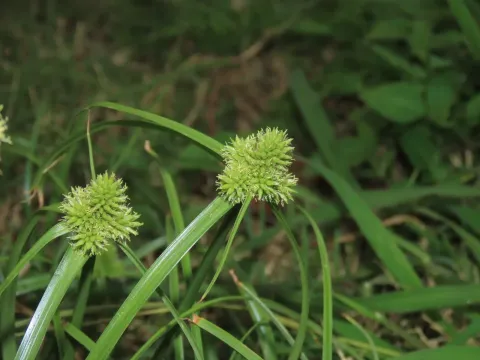
South African flatsedge
Cyperus austroafricanus
South African flatsedge (Cyperus austroafricanus) belongs to the Cyperaceae family and is a robust perennial herb native to the wetlands and riparian zones of Southern Africa.
What the section contains
South African flatsedge
This species is well-adapted to hydric soils, preferring substrates that retain high moisture levels throughout the growing season, while also tolerating seasonal inundations.
Optimal growth is achieved in sunny, open locations where the plant can utilize high light intensity to maximize photosynthesis and rhizome development.
The soil should ideally be fertile and loamy, capable of maintaining a neutral pH to facilitate the efficient uptake of essential macronutrients from the root zone.
Agricultural management requires careful attention to moisture control, as the plant acts as a natural water purifier in its native habitat, making it highly dependent on consistent hydrological support.
South African flatsedge is susceptible to various fungal pathogens, particularly those that thrive in humid environments and attack the stems or leaves during periods of poor ventilation.
Pest pressure from aphids and root-feeding larvae can impede development, especially when the plants are grown in monoculture systems without adequate soil aeration.
Implementation of integrated pest management (IPM) is crucial, focusing on biological controls and the application of targeted fungicides when infestation thresholds are exceeded.
Weed management remains the most significant challenge in the early growth stages, as seedlings are sensitive to competition for nutrients and solar radiation from aggressive weed species.
To ensure long-term crop health, farmers should focus on maintaining optimal planting density and ensuring that the irrigation system prevents stagnation of stagnant water that may harbor pathogenic bacteria.