
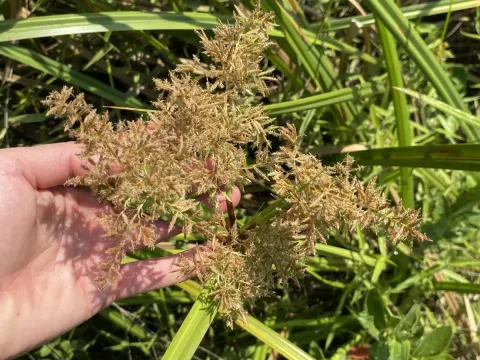
Broadleaf flatsedge
Cyperus latifolius
Broadleaf flatsedge (lat. Cyperus latifolius) is a perennial herbaceous plant belonging to the Cyperaceae family. It is native to tropical regions of Africa, where it thrives in environments characterized by high humidity and water availability.
What the section contains
Broadleaf flatsedge
Botanically, this species is defined by its robust root system and distinctive wide leaves, which differentiate it from many other grass-like sedges. The plant produces complex umbel-shaped inflorescences, which serve as a key taxonomic feature for identification.
The primary cultivation requirement for Cyperus latifolius is consistent soil moisture. It is a hydrophyte by nature, showing exceptional performance in riparian zones or saturated soils where other crops might suffer from root zone waterlogging.
The climate must be tropical or subtropical to satisfy the plant's thermal requirements. It is sensitive to cold temperatures and frost; therefore, cultivation is generally restricted to regions where seasonal temperatures remain high and the growing season is uninterrupted.
Fertile soils rich in organic matter are essential for biomass production. The plant prefers neutral to slightly acidic pH levels, which facilitate efficient nutrient uptake, particularly under the wet conditions where the species is naturally adapted to grow.
The economic value of this crop is primarily found in its use for artisanal manufacturing. The stems and leaves are harvested to produce various fiber-based goods, such as mats, traditional baskets, and other woven household items.
Harvesting usually involves cutting the stems at their peak maturity to ensure the fibers have reached sufficient length and tensile strength. Post-harvest, the material is typically air-dried under shade to maintain the natural pliability of the plant tissue.