
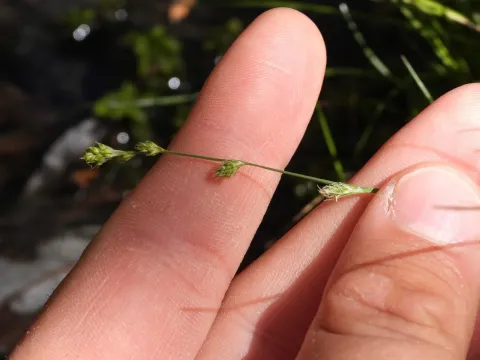
Brownish sedge
Carex brunnescens
The brownish sedge (Carex brunnescens) is a member of the Cyperaceae family. It is a perennial herbaceous plant widely distributed across subarctic and temperate regions, primarily thriving in moist forests, wetlands, and along marshy water margins.
What the section contains
Brownish sedge
Botanically, it is characterized by narrow leaves and small, distinctively brownish-colored spikelets. The plant forms dense, tufted clusters, which are highly effective at binding soil and stabilizing the substrate in wet environments.
Climate requirements for this sedge are centered on high humidity and cool to moderate temperatures. It is well-adapted to surviving saturated conditions and possesses significant resilience to the variable weather typical of northern latitudes.
The plant prefers acidic to neutral peat-based soils. It is adept at nutrient absorption from poor soils, often growing in substrates where traditional agricultural crops would fail due to excessive moisture or low mineral availability.
In agricultural practice, the brownish sedge is utilized mainly as part of natural grazing systems or meadow hay. While not a primary commercial crop, it provides essential cover and biomass in land areas prone to seasonal flooding.
Brownish sedge is remarkably resistant to common agricultural diseases. However, in poorly managed areas with stagnant water and restricted airflow, it may become susceptible to mild cases of fungal leaf spot or root rot.
Pest threats are generally minimal; however, insects such as seed-feeding larvae can affect the reproductive success of the sedge. Monitoring during the seed-ripening stage can help in assessing the overall health of the meadow.
Changes in landscape hydrology remain the primary threat. Large-scale drainage projects aimed at land reclamation often lead to the disappearance of sedge stands, as the plants struggle to adapt to drier soil profiles.
Competition from invasive plant species can hinder the growth of brownish sedge. If the balance of the meadow is disturbed by improper grazing or fertilizer runoff, faster-growing species can quickly outcompete this slow-growing sedge.
Managing threats involves maintaining the natural water regime and preventing overgrazing. By keeping the site stable and avoiding chemical pollution, the long-term viability of the sedge population is ensured.