
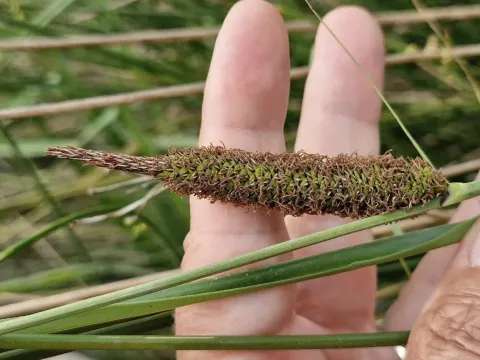
Bristly sedge
Carex hispida
Carex hispida, commonly known as bristly sedge, is a robust perennial herb belonging to the Cyperaceae family. Originating from the Mediterranean basin and North Africa, it is a plant specifically adapted to thriving in wet or marshy ecological niches.
What the section contains
Bristly sedge
The cultivation requirements focus heavily on soil moisture levels. Unlike most crops, Carex hispida demands saturated or poorly drained soils, making it an excellent candidate for stabilizing riparian buffers and flood-prone agricultural lands.
Regarding sunlight, the plant performs best in full sun but possesses the capability to tolerate partial shade. Soil pH preferences lean toward neutral or slightly acidic ranges, provided the soil remains consistently moist throughout the growing season.
Agrotechnical management involves ensuring sufficient organic nutrient content in the substrate. While it is a hardy plant, initial establishment requires consistent water availability to ensure deep root penetration and healthy development of the rhizomes.
Botanically, the species is distinguished by its dense, bristly inflorescences and tough, linear leaves. These adaptations serve to minimize water loss while maximizing structural integrity against water movement and wind erosion.
Disease pressure in Carex hispida is primarily associated with fungal pathogens that thrive in stagnant aquatic environments. Leaf spots and rusts are the most common afflictions, which can impede photosynthesis if left unmanaged.
Pest threats include various stem-boring insects and leaf-miners that can cause significant damage during the peak growing season. Their activity often leaves the plant susceptible to secondary infections through the physical wounds they create.
Competition from aggressive aquatic weeds or invasive grasses can threaten the density of sedge stands. Without proper weed control during the early stages of development, the cultural crop may be overshadowed and eventually crowded out.
Extreme fluctuations in water tables, particularly if they cause soil to dry out rapidly, can induce physiological stress. This stress weakens the plant’s natural defenses, making it more prone to insect attacks and soil-borne diseases.
Integrated pest management strategies should emphasize maintaining proper site drainage and removing infected debris to ensure the long-term health of the stand. Regular monitoring is essential to detect early symptoms of infestation or decline.